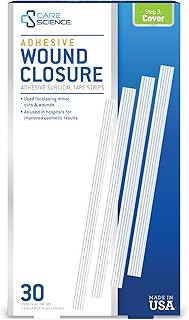
When it comes to managing minor cuts, lacerations, and surgical incisions, traditional stitches aren't always the best or only option. Enter Steri Strips, a reinforced adhesive skin closure system that offers a needle-free, less invasive path to healing. As a staple in first-aid kits, emergency rooms, and post-operative care, understanding how to properly use these medical tapes can significantly impact recovery outcomes. This expert guide delves deep into the world of adhesive skin closures, providing actionable insights for both healthcare professionals and informed individuals managing wounds at home.
The core principle behind Steri Strips is elegant in its simplicity. Instead of puncturing the skin with a needle and thread, these specialized tapes gently pull and hold the wound edges together, creating an ideal environment for the body's natural healing processes. They are particularly effective for linear, low-tension wounds on areas of the body where the skin is relatively flat and not subject to excessive movement. From a clean kitchen knife slip to a carefully closed surgical incision, these strips provide support without the trauma and potential for infection associated with sutures.
What Are Steri Strips and How Do They Work?
Steri Strips are not your average adhesive bandage. They are a type of reinforced surgical tape, often made from a porous, breathable material like rayon or a non-woven fabric, coated with a strong, hypoallergenic adhesive. The "reinforced" aspect is key—it means they have significantly greater tensile strength than standard medical tape, allowing them to hold wound edges together securely under mild to moderate tension. They work by distributing closure force along the length of the strip, minimizing stress on any single point of the skin and reducing the risk of tissue damage or necrosis.
Key Benefits of Choosing Adhesive Skin Closures
Opting for a suture alternative like Steri Strips comes with a host of advantages. First and foremost, the application is virtually painless, eliminating the need for local anesthetic and the anxiety of a needle. This makes them an excellent choice for children or needle-phobic individuals. They also present a lower risk of infection since the skin barrier is not punctured, leaving no needle tracks that could harbor bacteria. Furthermore, they typically result in less noticeable scarring. Because the wound edges are apposed without the pinpoint pressure of a suture, there is less chance of "railroad track" scarring, often leading to a more cosmetically appealing result.
From a practical standpoint, adhesive skin closures require no removal by a healthcare provider in most cases. They are designed to fall off naturally as the skin heals and regenerates underneath, usually within 5 to 14 days. This translates to fewer follow-up appointments and less disruption to daily life. For first responders and in first-aid supplies, their ease of use and speed of application are critical benefits in managing multiple casualties or providing immediate care in non-clinical settings.
Step-by-Step Guide to Proper Steri Strip Application
Correct application is paramount for Steri Strips to be effective. A poorly applied strip can lead to wound dehiscence (re-opening) or improper healing. Follow this professional technique:
- Prepare the Wound and Skin: The area must be clean, dry, and free of oils, lotions, or debris. Gently cleanse with mild soap and water or a saline solution. Pat the area completely dry with a sterile gauze pad. The skin surrounding the wound (at least 1-2 inches on either side) must be perfectly dry for the adhesive to bond.
- Approximate the Edges: If bleeding has stopped, gently bring the wound edges together so they touch evenly. For longer wounds, you may need an extra pair of hands or to use a few temporary pieces of tape to hold the alignment.
- Apply the First Strip: Take a Steri-Strip Adhesive Skin Closure and peel it from its backing. Do not touch the adhesive center. Place the strip perpendicular to the wound line, centered directly over the cut. Press one end firmly onto the dry skin on one side of the wound, then gently pull the wound edges together as you press the opposite end onto the skin on the other side. The strip should be slightly taut, but not so tight that it wrinkles the skin.
- Add Supporting Strips: Apply additional strips parallel to the first, spacing them about 1/8 to 1/4 inch apart. They should overlap the wound by at least 1-1.5 inches of healthy skin on each side. For extra security, you can place two smaller "anchor" strips at the ends of the primary strips, parallel to the wound.
- Final Check and Protection: Ensure all strips are firmly adhered. You may cover the area with a sterile, non-adherent dressing or a breathable bandage to protect the strips from catching on clothing and to absorb any minimal oozing.
When to Use Steri Strips vs. Traditional Stitches
Understanding the appropriate use case for skin strips is a critical part of wound care literacy. They are ideal for: clean, straight-edged lacerations; superficial surgical incisions; wounds on flat body surfaces (arms, legs, torso); and as a follow-up to suture or staple removal to provide continued support. However, they are not suitable for deep wounds, wounds with jagged edges, wounds over joints experiencing high mobility, wounds on highly contoured or hairy areas, or wounds that are actively infected or bleeding heavily. In these cases, professional medical evaluation for stitches, staples, or other closure methods is essential.
Essential Aftercare for Optimal Healing
Once applied, proper aftercare ensures your Steri Strips do their job. Keep the area clean and dry for the first 24-48 hours. After that, brief showers are fine, but avoid soaking the strips in baths, pools, or hot tubs. Gently pat the area dry after washing; do not rub. It is normal for the strips to curl at the edges as the wound heals. Do not peel them off prematurely. Allow them to fall off naturally. If they haven't fallen off after two weeks, you can gently loosen them by applying mineral oil or petroleum jelly to the adhesive and then carefully lifting them. Monitor for signs of infection: increasing redness, swelling, warmth, pus, or foul odor. If any of these occur, consult a healthcare provider immediately.
Common Mistakes to Avoid with Adhesive Closures
Even with the best intentions, mistakes can compromise healing. Avoid applying strips to wet or oily skin, as adhesion will fail. Do not stretch the strips too tightly, as this can blister the skin or cause the wound edges to invert. Never apply a strip directly over the wound without securing it to healthy skin on both sides. Resist the temptation to "reinforce" by applying multiple layers on top of each other; this traps moisture and can lead to maceration of the skin. Finally, using an expired or non-sterile product from your first-aid supplies kit increases infection risk.
Stocking Your Medical Kit: The Steri-Strip Advantage
For comprehensive preparedness, a product like Steri-Strip Adhesive Skin Closures, 1" x 5", 25 Packs of 4 Strips is an excellent choice. The 1x5 inch size is versatile for a range of wound lengths, and the packaging in individual sterile packs (25 packs of 4 strips) ensures you always have a fresh, uncontaminated supply ready for use. This format is perfect for home first-aid kits, travel bags, and workplace safety stations, providing a reliable, professional-grade wound closure option at your fingertips.
In conclusion, Steri Strips represent a powerful tool in modern wound management. By offering a less traumatic, user-friendly, and often cosmetically superior alternative to stitches for appropriate wounds, they empower individuals and professionals alike. Mastering their correct application and aftercare, as outlined in this guide, ensures you can leverage the full adhesive skin closures benefits for safer, more comfortable, and effective healing. Always remember that for deep, complex, or infected wounds, seeking professional medical advice is the first and most critical step.