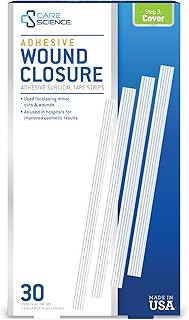
When it comes to treating minor cuts, lacerations, or surgical incisions, many people immediately think of stitches or staples. However, there's a simpler, less invasive, and often more comfortable alternative that belongs in every home and travel first aid kit: adhesive wound closure strips, commonly known by the brand name Steri Strips. These sterile, adhesive-backed strips are a medical-grade solution for bringing the edges of a wound together to promote healing and minimize scarring. This guide will walk you through everything you need to know about using these versatile tools effectively, from their core benefits to a foolproof application technique and the pitfalls to avoid.
Steri Strips are thin, flexible strips of porous tape, often made from a material like rayon or a non-woven fabric, coated with a strong, skin-friendly adhesive. They are designed to hold the edges of a clean, straight wound in close approximation, allowing the body's natural healing processes to work efficiently. Unlike stitches, which puncture the skin and can be painful to apply and remove, these strips work on the surface, making them ideal for shallow cuts, skin tears (especially common in the elderly), and as a follow-up to suture or staple removal. Their role in first aid cannot be overstated; they provide a bridge between a simple bandage and professional medical intervention.
Why Choose Adhesive Wound Closure Strips?
The benefits of using products like adhesive wound closure strips are numerous, especially for the savvy individual managing their first-aid supplies. First and foremost is patient comfort. The application is typically painless, and there's no need for anesthetic. They also eliminate the fear and anxiety associated with needles and suturing for many people. From a healing perspective, they reduce the risk of infection compared to sutures because they don't create additional puncture wounds that could introduce bacteria. They also promote a better cosmetic outcome by evenly distributing tension across the wound, which can lead to less noticeable scarring.
Furthermore, they are incredibly convenient. Once applied correctly, they are waterproof and can be left in place for several days, allowing you to shower normally. They are a cost-effective component of wound care, often cheaper than a trip to the clinic for stitches. For parents, they are a game-changer for handling kids' scrapes and cuts without tears. For travelers, they are a compact, lightweight surgical tape alternative that can handle minor emergencies far from medical help. Understanding these advantages helps you see why they are more than just "fancy tape"—they are a targeted medical device.
Step-by-Step: How to Apply Steri Strips Correctly
Proper application is critical for Steri Strips to work effectively. A poorly applied strip can fail to close the wound or even cause skin irritation. Follow these steps for best results. First, ensure safety: wash your hands thoroughly with soap and water. Gather your supplies: the sterile strips, antiseptic wipes or solution (like sterile saline or diluted betadine), sterile gauze, and possibly a pair of clean tweezers.
Begin with wound preparation. Gently clean the wound and the surrounding skin (about 2 inches around it) with your antiseptic solution. Use gauze to pat the area completely dry. This step is non-negotiable. Moisture is the enemy of adhesion. The skin must be perfectly dry for the strips to stick properly. If there is active bleeding, apply gentle pressure with sterile gauze until it stops completely before proceeding.
Now, for the application technique. Do not touch the adhesive side of the strip. Peel one strip from its backing. Starting about 1/2 to 3/4 of an inch from one side of the wound, place one end of the strip on the dry skin. Gently pull the skin on the opposite side of the wound toward the first side to bring the wound edges together. While holding the skin in this closed position, press the other end of the strip onto the dry skin on the opposite side, again about 1/2 to 3/4 of an inch from the wound edge. The strip should lie perpendicular to the wound, like a railroad tie across train tracks.
Apply additional strips, spacing them about 1/8 to 1/4 inch apart, until the entire length of the wound is supported. For added security, you can place two longer "anchor" strips parallel to the wound, at each end of the line of perpendicular strips. Press down firmly along the entire length of each strip to ensure good contact. Finally, you can cover the closed wound with a non-adherent dressing or a loose bandage for protection, but this is often not necessary.
Common Mistakes and How to Avoid Them (The "Don'ts")
Even with the best intentions, people often make errors when using adhesive skin closures. Awareness of these common pitfalls is key to successful wound management. Mistake #1: Applying to a dirty or wet wound. This is the most common cause of failure. Bacteria trapped under the strip can cause infection, and moisture guarantees the strip will peel off prematurely. Always clean meticulously and dry thoroughly.
Mistake #2: Stretching the strip taut over the wound. The strips are meant to hold the skin together, not to be pulled tight like a guitar string. A taut strip can cause skin tension, blistering, or even cut off circulation to the wound edges. Apply them with a very slight slack, just enough to keep the wound edges gently apposed.
Mistake #3: Using them on the wrong type of wound. Steri Strips are not a cure-all. They are unsuitable for deep, gaping wounds; wounds with jagged, uneven edges; wounds on high-mobility joints without additional support; puncture wounds; or obviously infected wounds. In these cases, seek professional medical attention. They are specifically designed for minor cuts and linear lacerations.
Mistake #4: Removing them too soon or too aggressively. The strips are designed to fall off on their own as the wound heals and the skin naturally exfoliates, usually in 5-10 days. Do not peel them off prematurely. If you need to remove them, soften the adhesive by soaking the area with warm water or applying a small amount of mineral oil or adhesive remover, then gently lift the edges.
Steri Strips vs. Stitches: Making the Right Choice
Knowing when to use Steri Strips and when to seek stitches is a crucial part of first-aid knowledge. As a general rule, Steri Strips are excellent for superficial, straight cuts that are not too deep and where the edges can be easily brought together with light finger pressure. They are perfect for facial cuts (where cosmetic outcome is paramount), shallow lacerations on limbs, and clean surgical incisions after suture removal.
Stitches (sutures) are necessary for deeper wounds where multiple layers of tissue (like muscle or fat) need to be closed, for wounds with uneven or torn edges, for wounds over joints where there is constant movement and tension, or for wounds that are actively bleeding and won't stop with direct pressure. If you are ever in doubt, it is always safer to consult a healthcare professional. Having a pack of sterile strips in your home first aid kit gives you the option for appropriate minor injuries, but it does not replace professional judgment for serious wounds.
Aftercare and Removal
Once your Steri Strips are in place, proper aftercare ensures optimal healing. Keep the area clean and dry for the first 24-48 hours. After that, you can usually shower normally; pat the strips dry gently afterward—do not rub. Avoid soaking the area in baths, pools, or hot tubs. Watch for signs of infection: increasing redness, swelling, warmth, throbbing pain, or pus. If any of these occur, remove the strips and see a doctor.
As mentioned, let the strips fall off naturally. If they are still on after 10-14 days and the wound appears well-healed underneath (a faint pink line), you can aid the process. Soak the area in warm water for a few minutes to loosen the adhesive, then gently lift one corner and peel slowly in the direction of hair growth, supporting the skin with your other hand. Never rip them off quickly. If there is any resistance or the wound seems to be pulling apart, stop and wait a few more days.
In conclusion, Steri Strips are a powerful, user-friendly tool for managing minor wounds. By understanding what they are, how to apply them correctly, and what mistakes to avoid, you can confidently add this skill to your first-aid repertoire. Whether for a kitchen mishap, a child's fall, or as part of post-operative care, these adhesive wound closure strips offer a simple yet effective path to cleaner, faster healing with minimal discomfort. Always ensure you have a sterile, reliable product on hand, like a 30-count pack of 1/4 x 4 inch strips, to be prepared for life's little accidents.


