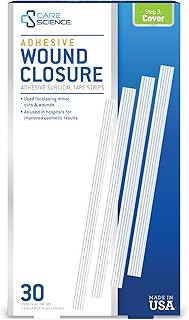
When it comes to managing minor cuts, lacerations, and surgical incisions, traditional stitches aren't always the best or only option. Enter Steri Strips, a type of reinforced adhesive skin closure that offers a needle-free, less invasive alternative for wound management. These medical-grade tapes have become a staple in first aid kits, hospitals, and homes for their simplicity and effectiveness. This comprehensive guide will delve into what Steri Strips are, how they work, their key benefits, and provide practical advice on their correct application and removal.
Steri Strips, also known as adhesive skin closure strips, are thin, flexible tapes made from a porous, non-woven fabric backing coated with a hypoallergenic adhesive. What sets reinforced versions apart is the inclusion of fine filaments or threads within the tape, significantly increasing their tensile strength. This reinforcement allows them to hold wound edges together securely, mimicking the support provided by traditional sutures but without puncturing the skin. They are designed to be breathable, allowing air and moisture vapor to pass through, which is crucial for creating an optimal healing environment and preventing maceration of the skin.
How Do Steri Strips Work for Wound Closure?
The principle behind Steri-Strips is mechanical apposition. When applied correctly across a clean, dry wound, the adhesive bonds to the healthy skin on either side. The reinforced structure then applies a gentle, consistent pulling force, drawing the wound edges together and holding them in perfect alignment. This is essential for proper healing, as it minimizes tension on the wound and allows the body's natural healing processes—like collagen production and epithelialization—to occur efficiently. Unlike stitches that create focal points of tension, Steri Strips distribute the closure force evenly along the length of the wound, which can reduce scarring and improve cosmetic outcomes.
Key Benefits of Using Steri Strips
Choosing Steri Strips over other closure methods comes with several distinct advantages, making them a versatile component of modern first aid supplies.
- Non-Invasive and Pain-Free Application: The most significant benefit is the absence of needles. This eliminates the pain, anxiety, and potential for needle-stick injuries associated with sutures, making them ideal for children and needle-phobic patients.
- Reduced Risk of Infection: Because the skin is not punctured, there is no pathway for bacteria to enter the deeper tissue layers, lowering the overall risk of wound infection.
- Minimal Scarring: By eliminating suture puncture marks and providing even tension, Steri Strips often result in finer, less noticeable scars.
- Breathable and Skin-Friendly: The porous material allows the wound to "breathe," preventing moisture buildup and promoting a healthier healing climate. The hypoallergenic adhesive is gentler on sensitive skin compared to some standard medical tape.
- Easy to Use and Remove: Application requires minimal training, and removal is typically straightforward and painless, often just involving peeling them off after soaking in warm water.
When to Use Steri Strips: Ideal Applications
Steri Strips are not a one-size-fits-all solution. They are most effective for specific types of wounds. They excel at closing linear, straight-edged lacerations on areas of low tension, such as the face, arms, and legs. They are perfect for small surgical incisions, like those from mole removals or minor procedures, and are excellent for securing dressings or reinforcing a wound after suture or staple removal. However, they are not suitable for deep, gaping wounds, wounds with uneven or jagged edges, wounds on high-mobility joints (unless properly supported), or wounds that are actively bleeding, infected, or contaminated.
Steri Strips vs. Traditional Stitches and Surgical Glue
Understanding where Steri Strips fit in the spectrum of wound closure options is key. Compared to stitches, they are less invasive, less painful to apply, and carry a lower infection risk, but they generally provide less holding strength, making them unsuitable for high-tension areas. Compared to surgical glue (cyanoacrylate), Steri Strips are more breathable and allow for wound drainage, whereas glue can seal in moisture and bacteria if not applied perfectly. Glue is also less flexible once set. Often, healthcare providers use a combination, such as placing a few key sutures for deep tissue alignment and then using Steri Strips for the final skin layer closure.
Step-by-Step Guide: How to Apply Steri Strips Correctly
Proper application is critical for Steri Strips to work effectively. First, control any bleeding and thoroughly clean the wound and surrounding skin with mild soap and water or a saline solution. Pat the area completely dry with a sterile gauze pad; moisture is the enemy of adhesion. Do not apply ointments like antibiotic cream to the area where the tape will stick. Gently bring the wound edges together with your fingers. Starting about 1/2 to 1 inch from one end of the wound, apply the first strip perpendicularly across the wound. Press down firmly on both ends, ensuring good contact with the skin. Apply subsequent strips parallel to the first, spacing them about 1/8 to 1/4 inch apart, until the wound is fully bridged. Leave a small gap between strips to allow for any wound drainage. Finally, apply strips at the ends of the wound, angled like "chevrons," to prevent the wound ends from peeling open.
Introducing the R1541 Reinforced Steri-Strip
For those seeking a reliable and strong option, products like the R1541 1/4'' x 3'' Steri-Strip Reinforced Skin Closure are an excellent choice. This specific product offers the benefits of a reinforced design in a convenient 3-inch length and 1/4-inch width, making it versatile for various wound sizes. The reinforcement provides the extra strength needed for secure closure without compromising flexibility or breathability. Sold in boxes of 50, it's a cost-effective and practical supply for clinics, first responders, or well-prepared home first aid kits.
Caring for a Wound Closed with Steri Strips
Once applied, keep the Steri Strips and wound clean and dry. You can shower, but pat the area dry gently afterward; avoid rubbing or soaking in a bath, pool, or hot tub. Monitor the wound for signs of infection, such as increased redness, swelling, warmth, pus, or foul odor. The strips will typically begin to curl at the edges and fall off on their own as the wound heals, usually within 5 to 14 days. Do not pull them off prematurely. If they need to be removed, soften the adhesive by soaking the area in warm water for a few minutes, then gently peel them back toward the wound, not away from it, to avoid stressing the healing tissue.
Common Mistakes to Avoid
Even with a simple product, errors can compromise healing. Avoid applying Steri Strips to dirty or wet skin, as adhesion will fail. Do not stretch the strips taut when applying; this creates undue tension on the skin. Never apply them over joints without proper immobilization, as constant bending will cause them to loosen. Crucially, do not use them as a substitute for professional medical evaluation for deep, large, or potentially serious wounds. When in doubt, seek advice from a healthcare professional to ensure you are using the right wound care technique.
Conclusion: A Valuable Tool in Modern Wound Management
Steri Strips represent a significant advancement in simple, patient-friendly wound care. As a surgical tape alternative, they provide an effective, low-trauma method for closing appropriate wounds, promoting healing, and minimizing scarring. Whether you're a medical professional stocking your clinic or an individual looking to upgrade your home first aid preparedness, understanding and having access to reinforced adhesive skin closure strips is invaluable. By following proper application and care guidelines, you can leverage this simple tool to support the body's remarkable ability to heal itself.