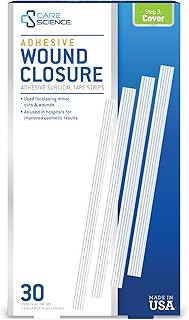
When it comes to closing a wound, the immediate thought often goes to stitches or staples. However, for many types of lacerations and surgical incisions, there's a gentler, less invasive, and highly effective alternative: Steri Strips. These reinforced adhesive skin closures are a staple in hospitals, clinics, and home first-aid kits for good reason. This comprehensive guide will walk you through what Steri Strips are, their key benefits, step-by-step application instructions, and how to determine if they're the right choice for your wound care needs.
What Are Steri Strips? Understanding the Basics
Steri Strips, a trusted brand often synonymous with the product category itself, are thin strips of sterile, porous tape made from a non-woven fabric backing with a strong, hypoallergenic adhesive. They are specifically designed to hold the edges of a clean, straight wound together, allowing the body's natural healing process to occur without the need for needle and thread. Unlike standard adhesive bandages, they are reinforced to provide significant tensile strength, mimicking the support of traditional sutures but without puncturing the skin. This makes them an excellent suture alternative for appropriate wounds.
The Advantages of Using Steri Strips for Wound Closure
Choosing Steri Strips over other closure methods offers several distinct benefits for both patients and healthcare providers. First and foremost, they are completely non-invasive. There is no needle, no puncturing of the skin, and therefore no risk of introducing additional trauma or a pathway for infection at the suture site. This also means the procedure is virtually painless upon application, a significant advantage for children or needle-averse individuals. Furthermore, they leave minimal scarring. By evenly distributing tension across the wound and avoiding puncture marks, they often promote a finer, less noticeable scar compared to stitches. They are also highly breathable due to their porous design, which helps keep the wound dry and reduces the risk of maceration (overly soft skin from moisture). For those looking for reliable wound closure supplies, products like the 3M Steri-Strip Skin Closures provide a trusted, hospital-grade option.
Step-by-Step Guide: How to Apply Steri Strips Correctly
Proper application is critical for Steri Strips to be effective. Follow these steps for optimal results. Step 1: Prepare the Wound and Skin. The wound must be clean, dry, and free of debris. Gently cleanse the area with mild soap and water or a saline solution, and pat it completely dry with a sterile gauze pad. The surrounding skin must also be dry and free of oils, lotions, or ointments, as these will prevent the adhesive from sticking. Step 2: Approximate the Wound Edges. Gently bring the edges of the wound together so they are aligned evenly. It's often helpful to have a second person assist or to use your fingers to hold the skin in place. Step 3: Apply the First Strip. Peel a Steri Strip from its backing. Apply the center of the strip perpendicularly across the middle of the wound, pressing down firmly on both sides. Do not stretch the strip taut; apply it without tension. Step 4: Add Additional Strips. Place more strips along the length of the wound, spacing them about 1/8 to 1/4 inch apart. They should be close enough to support the entire incision but not so close that they overlap. For extra strength, you can apply a couple of longer strips horizontally over the ends of the vertical strips in a "butterfly" or reinforced pattern.
Steri Strips vs. Stitches: When to Choose Which Method
While Steri Strips are versatile, they are not suitable for all wounds. Understanding the key differences will help you or your healthcare provider make the best decision. Choose Steri Strips for: Straight, clean cuts with smooth edges (lacerations). Superficial wounds that are not too deep. Wounds on low-tension areas of the body (e.g., face, forearm, shin). Wounds in patients with a high risk of infection from sutures. As a follow-up after suture or staple removal to provide continued support. Choose Traditional Stitches (Sutures) for: Deep wounds that extend into the fat or muscle layer. Jagged, uneven, or torn wound edges. Wounds on high-movement or high-tension areas (e.g., over joints like the knee or elbow). Wounds that are actively bleeding and require deeper ligation. Wounds caused by animal bites or that are heavily contaminated. When in doubt, always seek professional medical advice to assess the wound properly.
Caring for Your Wound After Applying Steri Strips
Post-application care is straightforward but essential. Keep the skin closures and the wound clean and dry. You can gently shower, but avoid soaking the area in baths, pools, or hot tubs. Pat the area dry after washing; do not rub. Do not apply creams, ointments, or antibiotic gels directly on the strips, as this will dissolve the adhesive. The strips are designed to fall off naturally as the wound heals and the skin regenerates underneath, which typically takes 5 to 14 days. Important: Never pull them off prematurely. If the edges start to curl, you can trim them with clean scissors. Watch for signs of infection, such as increased redness, swelling, warmth, pus, or fever, and consult a doctor if these occur.
Common Questions and Troubleshooting
What if the Steri Strip falls off too soon?
If a strip falls off within the first day or two, the skin may not have been clean and dry enough during application, or there may be too much tension on the wound. Clean the area again thoroughly, ensure it is completely dry, and reapply a new strip. If they continue to fail, the wound may require a different closure method.
Can I get the strips wet?
Brief exposure to water (like a quick shower) is generally fine. The key is to avoid prolonged soaking, which will weaken the medical adhesive. After getting wet, gently pat the area dry.
Are there people who shouldn't use Steri Strips?
Individuals with known sensitivities to adhesives should test a small piece on unaffected skin first. They are also not recommended for use on fragile skin conditions like eczema where the skin is already compromised.
Why Choose 3M Steri-Strip Skin Closures?
When selecting a product for wound management, brand trust and quality matter. The 3M Steri-Strip Skin Closures are a benchmark in the field. 3M is a leader in 3M medical technology, and their Steri-Strips are known for their reliable, strong-hold adhesive that is also gentle on skin. The porous backing allows for excellent air circulation, promoting a healthy healing environment. Having a multi-pack on hand, like the 10 packages of 3, ensures you have an ample supply for multiple applications or for your first-aid kit, making you prepared for minor injuries at home, during travel, or after outpatient procedures.
Conclusion: A Simple, Effective Tool for Modern Wound Care
Steri Strips represent a significant advancement in simple, patient-friendly wound management. By providing a strong, breathable, and non-invasive means of holding wounds closed, they reduce pain, minimize scarring, and simplify the healing process for a wide range of injuries. Whether you're a healthcare professional stocking your clinic or an individual looking to upgrade your home first-aid supplies, understanding how and when to use these reinforced surgical tape strips is an invaluable skill. Always remember that for deep, dirty, or complex wounds, professional medical evaluation is crucial. For appropriate clean lacerations and incisions, however, Steri Strips offer a brilliant blend of simplicity and clinical efficacy.