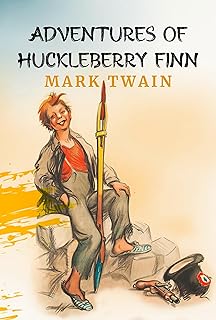
When discussing the pillars of American literature, one name consistently rises to the surface: Huckleberry Finn. More than just a sequel to The Adventures of Tom Sawyer, Mark Twain's 1884 novel represents a seismic shift in narrative voice and social commentary. It's a story that has been celebrated, debated, and banned, yet its power to captivate and challenge readers remains undiminished. At its heart, Adventures of Huckleberry Finn is a profound journey—both literal, down the mighty Mississippi River, and metaphorical, into the conscience of a young boy and a nation.
The novel's genius lies in its authentic, first-person narration. Through Huck's distinctive vernacular, Twain captures a raw, unfiltered view of the pre-Civil War American South. This narrative choice was revolutionary for its time, elevating regional dialect to high art and allowing readers to experience the world through the eyes of an uneducated but keenly observant child. Huck's voice is the engine of the story, driving its humor, its pathos, and its moral complexity.
The Unforgettable Journey Down the Mississippi
The Mississippi River is far more than a setting in Twain's novel; it is a central character and a powerful symbol. For Huck and the runaway slave Jim, the river represents the only path to freedom. On their raft, they find a fragile, temporary sanctuary from the corrupt and hypocritical society of the shore. The river's current carries them away from the constraints of "sivilization," as Huck calls it, and towards a space where a new kind of relationship can form.
This journey is the core of the book's adventure narrative. From dramatic encounters with feuding families and con artists to moments of serene contemplation under the stars, the river sequence is a masterclass in episodic storytelling. Each stop along the banks exposes a different facet of human folly, greed, and cruelty, contrasting sharply with the developing bond of loyalty and respect between the two fugitives on the raft.
Huck Finn's Moral Awakening: A Coming-of-Age Story for the Ages
While packed with adventure, Huckleberry Finn is, at its core, one of literature's greatest coming-of-age stories. Huck's internal conflict forms the novel's moral backbone. Raised in a society that views slavery as a natural, God-ordained institution, Huck is taught that helping Jim escape is a sin that will condemn him to hell. The climax of his personal journey comes when he must choose between this indoctrinated "conscience" and the genuine friendship he feels for Jim.
His famous declaration, "All right, then, I'll go to hell," is one of the most powerful moments in American fiction. It represents a triumph of innate human decency over learned prejudice. Huck chooses to define morality for himself, based on experience and empathy rather than societal rules. This process of moral education, achieved through lived experience rather than classroom teaching, is what elevates the novel from a simple adventure tale to a timeless exploration of ethics and humanity.
Controversy and Legacy: Why Huckleberry Finn Remains Essential
No discussion of classic literature is complete without acknowledging the novel's complex and ongoing controversy. Primarily, this stems from its pervasive use of racial slurs and its depiction of Jim. Critics argue that the character can be seen as a stereotype, and the language is painful and offensive. These are valid and important critiques that must be engaged with seriously.
However, many scholars and readers defend the novel as a fierce indictment of the racist society it portrays. Twain, they argue, uses the ugly language of the time not to endorse it, but to expose its brutality. Jim emerges not as a mere caricature, but as the novel's most noble character—a caring father, a wise friend, and a man yearning for dignity and freedom. The book forces readers to confront America's original sin head-on, making it an uncomfortable but necessary read. This very discomfort is a testament to its enduring power to provoke thought and discussion about race, history, and language.
Mark Twain's Mastery: Humor, Satire, and Social Critique
The novel's heavy themes are delivered with the sharp wit and satirical genius of its author, Mark Twain. Twain uses Huck's naive perspective as a tool to lampoon the absurdities and hypocrisies of adult society. From the pointless and deadly Grangerford-Shepherdson feud, which mirrors historical family conflicts, to the outrageous schemes of the "Duke" and the "Dauphin," Twain exposes greed, violence, and blind adherence to tradition.
His satire is relentless and multifaceted. He critiques organized religion, romantic literature (via Tom Sawyer's book-inspired, impractical plans), and the hollow concepts of honor and gentility. This blend of laugh-out-loud humor and piercing social critique is Twain's signature, ensuring the novel is both immensely entertaining and intellectually stimulating. It is this duality that secures its place as a literary classic studied in classrooms worldwide.
Experiencing Huckleberry Finn Today
For modern readers, approaching Adventures of Huckleberry Finn requires historical context and an open mind. It is not a book that offers easy answers. Instead, it presents a messy, challenging, and vividly real portrait of a specific time and place. To fully appreciate its nuances, consider reading annotated editions that explain historical references and dialects, or pair it with critical essays that explore its racial and cultural dimensions.
Whether you are encountering Huck and Jim's journey for the first time or returning to it, the novel promises a rich experience. It is a foundational text of American identity, a thrilling adventure story, and a profound moral puzzle. Its questions about freedom, friendship, and what it means to be a good person in a flawed world are as urgent today as they were in 1884. To own a piece of this legacy, explore the authentic Huckleberry Finn edition, which preserves Twain's original text and spirit for contemporary readers.
In the final analysis, Adventures of Huckleberry Finn endures because it is deeply human. It captures the tension between the individual and society, the struggle to listen to one's own heart, and the enduring hope for freedom. It is a book that holds a mirror up to America, reflecting both its darkest failures and its most hopeful possibilities. That is the mark of a true masterpiece, and why Huck's voice continues to resonate from the pages and down the river, calling to each new generation.