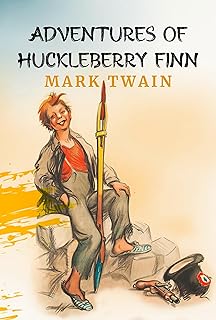
Mark Twain's The Adventures of Huckleberry Finn stands as a towering monument in the landscape of American literature. More than just a sequel to The Adventures of Tom Sawyer, it is a profound, complex, and often controversial coming-of-age story that holds a mirror to the soul of a nation. From its first publication in 1885, the novel has been celebrated as a masterpiece of satire and a fearless exploration of freedom, while simultaneously being one of the most frequently challenged and banned books in American history. This duality—its status as both a cherished classic and a lightning rod for debate—is central to understanding its enduring power and relevance.
At its heart, Huckleberry Finn is the story of a boy's moral awakening. Huck Finn, fleeing the constraints of "sivilization" and an abusive father, embarks on a raft journey down the Mississippi River. His companion is Jim, an enslaved man seeking freedom. Their journey becomes a powerful narrative of friendship and humanity set against the brutal backdrop of a pre-Civil War society. Through Huck's first-person narration, Twain masterfully critiques the hypocrisy, racism, and social conventions of the time, using humor and irony to deliver a devastating social commentary. For a deeper dive into the novel's plot and characters, our comprehensive Huckleberry Finn analysis provides further insights.
One of the novel's greatest strengths is its rich thematic tapestry. It is a foundational work of the American literature canon, grappling with quintessential American themes: the quest for individual liberty versus societal conformity, the innocence of youth confronting a corrupt world, and the stark divide between law and conscience. Huck's internal conflict—his struggle between the racist teachings of his society and his growing recognition of Jim's humanity—forms the novel's ethical core. This makes it a quintessential coming-of-age novel, where maturity is measured not by years, but by moral courage.
Twain's genius as a writer is on full display in his use of vernacular language. By writing in the distinct dialect of the American South, he gave an authentic voice to his characters, particularly Huck and Jim, revolutionizing American prose. This choice, while groundbreaking, is also a primary source of the novel's ongoing controversy. The pervasive use of racial slurs, rooted in historical accuracy for Twain's critique, has made the book a perennial subject of debate in schools and libraries. Its place on lists of banned books speaks to the uncomfortable but necessary conversations it forces about language, history, and racism. Understanding this context is crucial for any modern reader or student of the novel.
Beyond its social critique, the novel is a masterpiece of literary fiction and a brilliant satire novel. Twain lampoons everything from aristocratic feuds and religious hypocrisy to sentimentalism and blind adherence to tradition. Characters like the Duke and the Dauphin are hilarious yet pathetic embodiments of fraud and greed, while the Grangerford-Shepherdson feud exposes the absurdity and tragedy of mindless violence. This satirical edge ensures the story remains sharply relevant, as the human follies Twain mocked are, unfortunately, timeless.
For collectors and serious readers, the edition of a classic matters. The Masterpiece Library Edition of The Adventures of Huckleberry Finn is designed for those who appreciate the novel as both a literary work and an artifact. This edition often includes insightful introductions, historical notes, and sometimes illustrations that enhance the reading experience. It presents the complete, unabridged text, allowing readers to engage with Twain's original vision in a durable and aesthetically pleasing format. Owning such an edition is a testament to the book's status as a permanent fixture in the library of world literature.
Why does Huckleberry Finn, a book over 135 years old, continue to be read, taught, and argued about? The answer lies in its uncompromising honesty. It does not offer easy answers. It presents a flawed, racist society through the eyes of a flawed, but essentially good, boy who must find his own moral compass. The journey of Huckleberry Finn and Jim down the river is a metaphor for the American struggle toward freedom and equality—a journey that is ongoing. The novel challenges readers to question authority, to listen to their conscience, and to recognize the shared humanity in others, making it an eternally vital and provocative read.
Engaging with this Mark Twain classic is therefore not a passive experience. It is an invitation to dialogue—with the text, with history, and with our own preconceptions. Whether you are encountering it for the first time or returning to it with a more seasoned perspective, The Adventures of Huckleberry Finn promises a rich, challenging, and ultimately rewarding journey. Its laughter is tinged with sadness, its adventure fraught with danger, and its conclusion deliberately ambiguous, leaving the reader to ponder the true meaning of freedom and what it means to be truly "civilized."