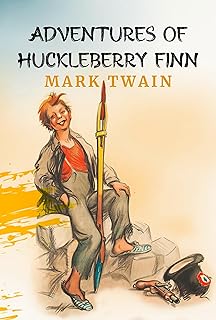
For over a century, Huckleberry Finn has stood as a towering pillar of American literature, a novel that simultaneously captures the spirit of its time and speaks to universal truths about freedom, morality, and friendship. While many readers encounter the story in modernized or abridged forms, there is a compelling case to be made for seeking out the source: the original, unaltered 1884 edition. This version, free from the well-intentioned but often distorting edits of later publishers, offers the purest connection to Mark Twain's genius and his most controversial, celebrated creation.
Understanding the significance of the 1884 edition requires a journey back to its publication context. Released in the United Kingdom in December 1884 and in the United States in February 1885, the novel arrived in a nation still grappling with the aftermath of the Civil War and the failed promises of Reconstruction. Twain's use of vernacular speech, including the period-accurate dialect and language that has sparked ongoing debate, was a deliberate artistic choice. Reading the unabridged text allows us to engage with Twain's work as he intended it—a complex, satirical, and profoundly human portrait of America. It is in this complete form that the novel's critique of societal hypocrisy and its exploration of a boy's moral awakening are most powerfully rendered.
The Unabridged Advantage: Experiencing Twain's Full Vision
What exactly does "unabridged" mean for Huckleberry Finn? It means encountering every word, every dialectical nuance, and every scene as Twain penned it. Modern editions, particularly those aimed at school curricula, have sometimes been sanitized—softening language, shortening passages, or adding explanatory notes that can interrupt the narrative flow. The 1884 edition presents the raw, unfiltered story. This completeness is crucial for appreciating the novel's structure and rhythm. The leisurely pace of life on the raft, the detailed interactions between Huck and Jim, and the biting satire of the "sivilized" world along the shore all rely on Twain's original pacing and detail.
For scholars and serious readers, the unabridged version is non-negotiable. It serves as the primary text for any literary analysis, from studying its use of 19th-century fiction conventions to deconstructing its themes of race and identity. The character of Jim, in particular, is fully realized only in the complete text, where his humanity, intelligence, and dignity are given space to develop beyond the caricature he might become in truncated versions. Choosing an unabridged edition, like The Adventures of Huckleberry Finn: The Original 1884 Unabridged and Complete Edition, is an investment in an authentic literary experience.
Huckleberry Finn as the Quintessential Coming-of-Age Novel
At its heart, Huckleberry Finn is one of the world's great coming-of-age novels. Huck's journey down the Mississippi is a metaphor for his journey away from the corrupted morals of society and toward his own ethical compass. The critical moment—when Huck decides to "go to hell" rather than betray his friend Jim—carries its full weight only in the unabridged narrative, where the relationship has been built meticulously over many chapters. We see Huck's internal conflict not as a single epiphany, but as a gradual education, shaped by every con artist he meets and every silent moment on the river.
This aspect of the novel makes it perpetually relevant. Every generation of young readers discovers in Huck a companion who questions authority, values loyalty, and seeks a personal definition of right and wrong. The unabridged edition preserves all the subtle lessons Huck learns, from the absurdity of the Grangerford-Shepherdson feud to the cruel farce of the Duke and the Dauphin's schemes. It is a masterclass in character development, showing how a boy's conscience is formed not by doctrine, but by experience and empathy.
A Literary Adventure Through the Heart of America
To categorize Huckleberry Finn merely as an adventure story is to undersell it, but its qualities as a literary adventure are undeniable. The Mississippi River is as much a character as Huck or Jim—a pathway to freedom, a bringer of danger, and a timeless symbol of movement and change. The unabridged edition allows the adventure to unfold with all its original suspense and humor. The episodes with the wrecked steamboat Walter Scott, the foggy separation of the raft, and the final, chaotic events at the Phelps farm are all paced for maximum effect in Twain's original manuscript.
This adventurous spirit is intertwined with sharp social commentary. Twain uses the journey as a device to showcase a cross-section of pre-Civil War American society, with all its virtues and vices. The adventure is not just physical but intellectual and moral. For modern readers, following this complete literary adventure provides an immersive historical experience, a ride through a landscape that is both uniquely American and universally understood in its depiction of the quest for liberty.
Why Choose a Dedicated "Complete Edition"?
In a market flooded with versions of classic novels, seeking out a designated complete edition is a mark of a discerning reader. A quality complete edition does more than just reprint the text; it often includes valuable contextual materials. A good edition, like the one in the Mark Twain Classics series, may feature the original illustrations, an insightful introduction that discusses the novel's publication history and controversies, and perhaps even notes on the text. These extras enrich the reading experience, helping you understand not just the story, but its place in literary history.
For collectors and enthusiasts, an unabridged complete edition holds intrinsic value. It represents a commitment to preserving literary heritage. In the case of Huckleberry Finn, owning the complete work is a statement about engaging with challenging art in its entirety, rather than a simplified facsimile. It is an invitation to participate in the ongoing conversation about one of the most important books ever written in the United States.
The Enduring Legacy and Modern Relevance
The debates surrounding Huckleberry Finn—its language, its racial portrayals, its place in education—are a testament to its enduring power. A novel that provokes such strong feelings over 130 years after its publication is clearly not a relic, but a living document. Engaging with the unabridged 1884 text is the best way to form a personal, informed opinion on these debates. It allows you to see the full scope of Twain's satire and the complexity of his characters, particularly Jim, beyond the incendiary single words that often dominate discussion.
In today's world, Huck's struggle to listen to his heart over the racist teachings of his society remains a potent lesson. The novel's central theme—that humanity and friendship can transcend socially constructed barriers—is timeless. By reading the complete, original novel, we honor Twain's artistic courage and give ourselves the opportunity to be challenged, entertained, and moved by a true masterpiece. It is an essential journey for any reader interested in the roots of American storytelling and the enduring questions of what it means to be good, free, and human.
Ultimately, to read Huckleberry Finn in its original 1884 unabridged form is to meet Mark Twain on his own terms. It is to accept the invitation onto the raft, to drift down the mighty Mississippi with all its perils and beauties intact, and to witness one of literature's greatest transformations. Whether you are a student, a collector, or a lifelong lover of classics, choosing the complete edition is the most authentic and rewarding way to experience this defining work of American literature.


