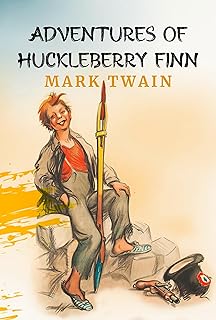
More than a century after its publication, The Adventures of Huckleberry Finn continues to spark debate, inspire readers, and hold a mirror to society. Often hailed as the "great American novel," Mark Twain's masterpiece is far more than a simple adventure story of a boy and a runaway slave on the Mississippi River. It is a complex, layered work of satire and social commentary that tackles themes of freedom, morality, racism, and the hypocrisy of "civilized" society. For modern readers, understanding Huckleberry Finn is key to understanding a pivotal era in American history and the literary genius of Mark Twain.
At its core, the novel is a powerful coming-of-age story. We follow Huck's internal journey as he grapples with the morals taught to him by a society that upholds slavery. His decision to help Jim, the runaway slave, despite believing he is committing a sin, represents one of the most profound moral awakenings in 19th century fiction. This conflict between heart and corrupted conscience is what gives the novel its enduring emotional power and cements its status as essential American literature.
The Genius of Mark Twain's Narrative Voice
One of the revolutionary aspects of The Adventures of Huckleberry Finn was Twain's use of the first-person vernacular. Huck tells his own story in his own Midwestern dialect, a bold literary move that brought unprecedented authenticity and immediacy to American prose. This voice allows readers to experience the world through Huck's eyes—his confusion, his humor, his growing awareness. It makes his moral dilemmas feel real and urgent. When you pick up a copy of this Mark Twain classic, you're not just reading a story; you're listening to a distinct, unforgettable American voice.
Satire as a Weapon Against Social Hypocrisy
Twain masterfully uses satire to expose the absurdities and cruelties of the pre-Civil War South. Through Huck's naive observations, we see the grotesque flaws in so-called respectable society: the feuding families like the Grangerfords and Shepherdsons, who slaughter each other over a forgotten slight; the con artists, the "Duke" and the "Dauphin," who exploit everyone they meet; and the well-meaning but ultimately oppressive Widow Douglas and Miss Watson. The novel relentlessly questions what it truly means to be "civilized," suggesting that true morality often lies outside established social norms. This sharp social commentary remains strikingly relevant, challenging readers to examine their own societies with a critical eye.
Navigating the Complex Legacy of Race and Language
It is impossible to discuss Huckleberry Finn without addressing its complicated relationship with race. The novel's use of racial slurs has made it a frequent target for censorship, yet many scholars argue that Twain uses this language intentionally to portray the brutal reality of the time and to condemn the system that uses such language. The heart of the novel is the evolving relationship between Huck and Jim. Jim is not a stereotype; he is a fully realized character—a caring father, a superstitious but wise man, and a human being desperate for freedom. Huck's journey to see Jim as a friend and a person, rather than property, is the central moral arc. Engaging with this challenging aspect is crucial for a full appreciation of the novel's purpose and power.
The Mississippi River: More Than Just a Setting
The Mississippi River is the lifeblood of the novel, symbolizing freedom, escape, and a natural order contrasted with the corruption on shore. On the raft, Huck and Jim find a fragile, temporary utopia where they can be themselves. The river dictates their journey, offering both peace and peril. It represents the possibility of a different America, one flowing away from the constraints of society. This iconic setting has cemented the book's place in the canon of great American adventure stories.
Why You Should Read (or Re-read) Huckleberry Finn Today
In an era of ongoing social reckoning, The Adventures of Huckleberry Finn offers a vital historical perspective and a timeless lesson in empathy. It is a novel that demands active reading and critical thinking. It makes us uncomfortable, asks difficult questions, and refuses to provide easy answers. To experience this foundational work of American culture, consider picking up a well-annotated edition that provides historical context. You can explore a classic copy of this enduring bestseller for yourself. Discover why this story of a boy's river adventure continues to be one of the most discussed and important books ever written.
Beyond the Book: The Lasting Impact of a Classic
The influence of Huckleberry Finn is immeasurable. It paved the way for later American writers like Hemingway and Faulkner, who credited Twain with creating modern American writing. The novel has been adapted countless times for film, stage, and even graphic novels, each interpretation grappling with its complex legacy. It remains a staple in educational curricula, not as a perfect artifact, but as a living text that sparks essential conversations about history, language, ethics, and national identity. Its status as a cornerstone of American literature is unshakable precisely because it continues to challenge and provoke.
Ultimately, The Adventures of Huckleberry Finn endures because it is a profoundly human story. It is about the struggle to do right in a world that often champions wrong. It is about friendship that transcends societal barriers. And it is about the search for freedom, both physical and moral. To own a piece of this literary history and embark on this unforgettable journey down the Mississippi, you can find the novel here: Adventures of Huckleberry Finn. Dive into the world of Huck and Jim, and discover for yourself why this novel remains an indispensable, if complicated, treasure.