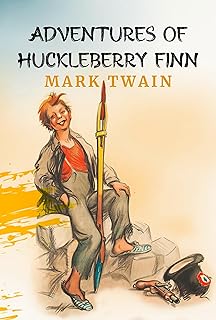
When discussing the pillars of American literature, one name invariably rises to the surface: Huckleberry Finn. Mark Twain's seminal work, officially titled The Adventures of Huckleberry Finn, is far more than a simple sequel to The Adventures of Tom Sawyer. It is a profound, complex, and often controversial journey into the heart of pre-Civil War America, tackling themes of freedom, morality, race, and societal hypocrisy with a rawness that was revolutionary for its time and remains powerful today. This guide aims to unpack the layers of this iconic novel, exploring its historical context, its groundbreaking narrative voice, and the reasons it continues to spark debate and admiration over a century after its publication.
The story picks up where Tom Sawyer left off, with Huck under the guardianship of the Widow Douglas, who is attempting to "sivilize" him. Huck's drunken and abusive father, Pap, reappears to claim Huck and his money, leading Huck to stage his own murder and escape down the Mississippi River on a raft. His companion in flight is Jim, Miss Watson's enslaved man, who has run away upon hearing he might be sold down the river. What follows is not just a physical journey from Missouri toward the free states, but a moral and philosophical odyssey for young Huckleberry Finn.
At its core, the novel is a masterpiece of point of view. Twain employs Huck's first-person narration, written in a distinctive regional dialect, to filter the events of the story. This choice is genius. Through Huck's innocent, yet perceptive eyes, we see the world as it is, not as society says it should be. Huck's internal conflict—between the racist doctrines he has been taught and his growing friendship and respect for Jim—forms the novel's emotional and ethical backbone. His famous declaration, "All right, then, I'll go to hell," after deciding to help Jim escape rather than turn him in, is one of the most powerful moments in American literature, signifying a personal morality triumphing over a corrupt social code.
The Controversial Genius of Huckleberry Finn
No discussion of Huckleberry Finn is complete without addressing the controversies that have surrounded it since its 1885 publication in the United States (it was first published in England in 1884). The novel's frequent use of racial slurs, particularly the n-word, has made it a perennial subject for censorship and debate in school curricula. Critics argue that the language is painful and traumatizing for students, especially Black students, and can perpetuate harmful stereotypes.
Conversely, defenders, including many scholars and authors like Toni Morrison and Ernest Hemingway (who famously said all modern American literature comes from this one book), argue that Twain's use of language is intentional and crucial. They contend that the novel is a savage indictment of racism and slavery. By presenting the world through Huck's unvarnished perspective, Twain forces readers to confront the ugly reality of the time. Jim is not a caricature; he is portrayed as a compassionate, intelligent, and complex human being—a father desperate to buy his family out of slavery. The true villains are the con men, the mobs, and the "respectable" people who uphold an immoral system. Understanding this context is key to appreciating the novel's radical anti-racist stance for its era.
Key Themes and Symbols in the Narrative
Twain weaves several potent themes throughout Huck and Jim's journey. The most prominent is the quest for freedom. For Jim, it is literal freedom from bondage. For Huck, it is freedom from the constraints of "sivilization," from Pap's abuse, and from the hypocritical morality of the towns along the river. The Mississippi River itself becomes the ultimate symbol of this freedom—a flowing, unpredictable path away from society's rules. On the raft, Huck and Jim find a fragile, egalitarian community. The river represents peace, while the shore consistently brings deception, violence, and corruption.
Another major theme is the critique of "sivilized" society. Almost every character Huck and Jim encounter on land is flawed, foolish, or downright malicious. From the feuding Grangerfords and Shepherdsons, whose bloody vendetta has lost all meaning, to the fraudulent "Duke" and "Dauphin," who exploit everyone they meet, Twain paints a picture of a society deeply flawed at its core. Huck's intuitive goodness, developed through his lived experience with Jim, stands in stark contrast to the learned cruelty and greed of the adult world.
Huckleberry Finn in the Modern Literary Canon
Why does Huckleberry Finn remain so relevant? Its staying power lies in its uncomfortable truths and its formal innovation. It captured the American vernacular like no novel before it, giving a voice to the marginalized and changing the course of literary realism. The relationship between Huck and Jim remains a timeless exploration of friendship across societal barriers.
For modern readers and students, engaging with the novel requires historical awareness and critical discussion. It should not be read in a vacuum. Teachers and readers are encouraged to frame it within its historical context, discuss the author's intent, and openly address the impact of its language. This approach transforms the book from a potential source of offense into a powerful tool for discussing America's racial history, the evolution of language, and the complex nature of literary satire.
Conclusion: The Unfinished Journey
The ending of The Adventures of Huckleberry Finn has also been a point of contention for some critics, who find Tom Sawyer's elaborate, cruel scheme to "free" an already-free Jim to be a disappointing return to farce. However, this can also be interpreted as Twain's final critique. Tom represents the romantic, childish, and ultimately harmful fantasies of the Old South, oblivious to real human suffering. Huck, having undergone his transformative journey, is visibly uncomfortable with the plan, signaling his growth. The novel concludes with Huck's famous resolve to "light out for the Territory" to escape being adopted and "sivilized" by Aunt Sally. This open-ended finale reinforces the theme of seeking freedom and aligns perfectly with the restless, independent spirit of the character and the nation itself.
In the final analysis, Huckleberry Finn is not a comfortable book, nor was it meant to be. It is a challenging, brilliant, and essential piece of the American story. Its portrayal of a boy learning to think for himself, to see a fellow human being as a friend rather than property, and to choose his own moral path continues to resonate. To explore the depths of this classic is to engage in a conversation about freedom, justice, and the very meaning of America. For anyone seeking to understand the foundations of American literature and the nation's ongoing dialogue with its past, the journey with Huck down the Mississippi remains an indispensable rite of passage.