
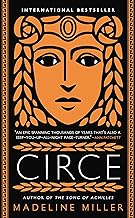
Madeline Miller's Circe has captivated readers and book clubs worldwide, offering a profound and feminist reimagining of one of mythology's most enigmatic figures. Transforming a supporting character from Homer's Odyssey into a complex protagonist, Miller's novel explores themes of power, agency, identity, and exile. For a book club, this rich text promises a discussion that can span from ancient lore to modern relevance. To navigate its depths, a structured study guide for book clubs becomes an invaluable companion, providing the framework for a meaningful and engaging conversation.
This article serves as your comprehensive circe study guide, designed to help your reading group unlock the layers of Miller's masterpiece. We'll delve into key themes, character motivations, and the novel's literary significance, equipping you with the tools for a discussion that goes beyond the plot summary. Whether your club is new to literary analysis or filled with seasoned critics, these insights and questions will foster a deeper appreciation for Circe's journey from a dismissed nymph to a formidable witch in control of her own destiny.
Why Circe is a Perfect Book Club Selection
Circe is more than a retelling; it's a conversation starter. Its narrative brilliance lies in its ability to resonate on multiple levels. For a book club guide, this is ideal material. The novel provides ample ground for discussing feminist reinterpretations of classic stories, the nature of divinity versus humanity, and the timeless search for belonging. The protagonist's evolution—marked by loneliness, resilience, self-discovery, and hard-won power—offers relatable touchstones for every reader. A dedicated novel discussion questions resource can help channel these broad themes into focused, productive dialogue that illuminates different perspectives within your group.
Core Themes for Literary Analysis
Power, Agency, and Transformation
At its heart, Circe is a study of power—who wields it, how it's acquired, and what its costs are. Circe's power, pharmaka (witchcraft), is initially a source of fear and exile but ultimately becomes her tool for self-definition and protection. Discuss how her relationship with power changes throughout the novel. Compare the tyrannical, static power of the gods on Olympus with Circe's earned, transformative power on Aiaia. A robust literary analysis guide would prompt you to examine key scenes: her first act of transformation with Glaucos, her dealings with Odysseus and his men, and her final confrontation with the Titan Helios. How does her magic represent a different, perhaps more authentic, kind of strength?
Isolation, Loneliness, and Chosen Family
Exile is both Circe's punishment and her liberation. Her island, Aiaia, is a prison that becomes a kingdom. Explore the duality of her isolation. How does loneliness shape her? When does solitude become empowering? Trace her relationships—with Hermes, Daedalus, Odysseus, Penelope, and Telemachus—and discuss which connections are transactional, which are transformative, and how she gradually builds a chosen family. This theme is ripe for personal connection in a book club setting, moving the discussion from mythological analysis to human experience.
Feminism and Reclaiming Narrative
Miller performs a quintessential feminist act: centering the story of a woman traditionally defined by her interactions with powerful men (like Odysseus). Circe moves from object to subject. Analyze how Miller gives voice and interiority to a character previously sidelined. Consider other female figures like Pasiphaë, Penelope, and Scylla. How do their stories comment on the constraints and expectations placed on women, both divine and mortal? A reading companion focused on this angle would highlight how the novel critiques patriarchal structures of both the mythical and the modern world.
In-Depth Character Study: Circe's Evolution
A deep character analysis is crucial. Circe's journey is not linear. She experiences vulnerability, rage, compassion, and wisdom. Break her life into phases: the neglected child in Helios's halls, the naive lover betrayed, the fearful exile learning her craft, the confident but lonely goddess, and finally, the mortal-making choice. What are her defining choices at each stage? How does her understanding of love, both familial and romantic, evolve? Discuss her mortality as her ultimate act of agency. Comparing notes on character motivation is where book club discussions often shine brightest.
Essential Discussion Questions for Your Club
To spark a vibrant conversation, move beyond "Did you like the book?" Here are structured questions, the kind you'd find in a quality book club resources collection:
- On Transformation: Circe transforms others, but how is she herself transformed throughout the novel? Is her final transformation into a mortal a victory or a compromise?
- On Morality: Circe turns sailors into pigs. How does Miller make us sympathize with this act? Where do you see her morality diverging from the Olympian gods?
- On Odysseus: How does Miller's portrayal of Odysseus differ from Homer's? Why do you think their relationship unfolds as it does, and what does it reveal about both characters?
- On Ending & Choice: Circe chooses mortality. Why is this the perfect ending for her character arc? What does it say about the value of a finite, human life compared to an immortal, divine one?
- On Modern Relevance: What contemporary issues does Circe speak to? Consider themes of female voice, toxic family dynamics, the price of power, and self-exile.
Enhancing Your Meeting with a Structured Guide
While general questions are helpful, a dedicated study guides for book clubs product offers a significant advantage. A comprehensive guide, like the Study Guide for Book Clubs: Circe, typically provides chapter-by-chapter summaries, thematic essays, character bios, and curated discussion questions with suggested answers. This structure ensures your club covers the novel's nuances, saves the moderator preparation time, and keeps the conversation flowing and focused. It transforms a casual chat into a scholarly yet accessible literary exploration, deepening everyone's understanding and enjoyment.
Comparative Analysis: Circe in Context
To enrich your discussion, consider Circe in a broader literary context. Compare it to Miller's first novel, The Song of Achilles. How does her approach to retelling differ? You might also contrast Circe with other modern mythological retellings from feminist perspectives, such as Natalie Haynes' or Pat Barker's works. Discuss the challenges and merits of revitalizing ancient stories for a modern audience. This elevates your book club from discussing a single book to engaging with a vibrant literary trend.
Final Tips for a Successful Circe Book Club Night
Set the mood! Consider decorating with Greco-Roman elements, serving wine (or a non-alcoholic "pharmaka" punch), and perhaps playing ambient sounds of the sea. Encourage members to bring their favorite quotes. Most importantly, use a resource that provides depth and direction. Leveraging a specialized study guide ensures your discussion of Madeline Miller's Circe is as powerful, transformative, and memorable as the novel itself. It empowers your club to move from simply reading a story to collectively unpacking its timeless magic and meaning.

![Circe [AdN] (Spanish Edition)](https://m.media-amazon.com/images/I/813lle2hSML._AC_UY218_.jpg)


