
In the vast landscape of contemporary fantasy literature, two novels stand as towering, labyrinthine achievements: Madeline Miller's Circe and Susanna Clarke's Piranesi. While seemingly distinct—one a lush reimagining of ancient Greek myth, the other a mysterious exploration of an infinite, sea-flooded house—they share a profound kinship. Both are masterclasses in world-building, character study, and thematic depth, offering readers not just escape, but transformation. This guide delves into the magical realms these authors have conjured, examining why books like Piranesi and retellings like Circe resonate so powerfully with modern audiences and have earned their places as award-winning bestsellers.
Re-enchanting the Ancient: The Power of Mythological Retellings
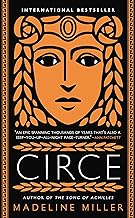
The resurgence of mythological fiction is one of the most significant trends in modern publishing. At its forefront is Madeline Miller's Circe, a novel that takes a minor, often villainized figure from Homer's Odyssey and grants her an epic story of her own. Miller's work exemplifies how contemporary mythological fiction does more than just retell old stories; it interrogates them, uncovering new perspectives on power, agency, love, and immortality. Circe transforms the witch of Aeaea from a plot device into a complex protagonist whose journey from neglected nymph to formidable sorceress is deeply human. This narrative alchemy—turning familiar myths into fresh, feminist parables—has captivated millions, proving that ancient tales still hold urgent lessons about isolation, creativity, and self-determination.
Into the House: The Unique Magic of Susanna Clarke's Piranesi
If Circe expands a myth, Susanna Clarke's Piranesi invents an entirely new mythology. Clarke, renowned for her masterpiece Jonathan Strange & Mr Norrell, here crafts a sublime and puzzling world: the House. Endless halls filled with classical statues are washed by tides, populated by birds, and inhabited only by the naïve, journal-keeping Piranesi and the elusive Other. The novel is a breathtaking exercise in magical realism and psychological depth, blurring the lines between memory, identity, and reality. It asks fundamental questions about what it means to be content, to know oneself, and to find meaning in a seemingly meaningless universe. Its quiet, profound magic has cemented its status as a modern classic and a frequent Book of the Year contender.
Shared Threads: Isolation, Identity, and Transformation
Despite their different settings, Circe and Piranesi are intimately connected by core themes. Both protagonists experience profound isolation. Circe is exiled to a deserted island by the gods; Piranesi is alone in a world with only one other human. This solitude becomes a crucible for self-discovery. For Circe, it's a space to hone her witchcraft and define her morality apart from the capricious gods. For Piranesi, it's a state of being that leads to a unique, worshipful relationship with the House and its beauty. Their journeys are ultimately about transformation—not the magical kind, though that is present, but the internal, hard-won change that defines a life. They move from being defined by others (by gods, by the Other) to defining their own existence, making them deeply resonant figures for any reader contemplating their own path.
Why These Novels Captured the Bestseller Lists
The commercial and critical success of both novels is no accident. They satisfy a deep readerly desire for intelligent, beautifully written fantasy novels that treat the genre with literary seriousness. Circe taps into the popular and potent wave of feminist retellings, giving voice to the silenced. Piranesi, on the other hand, offers a pure, puzzling, and poignant escape that feels both timeless and urgently relevant in an age of information overload. They prove that fantasy is not mere escapism, but a powerful lens for examining the human condition. Readers aren't just buying a story; they are buying an experience—of wandering sun-drenched Aeaea or the tidal halls of the House—and a new way of seeing the world.
A Guide for Discerning Readers: Choosing Your Next Magical Read
If you loved the lyrical prose and deep characterization of Circe, then exploring Piranesi is a logical and rewarding next step. You will find a similar attention to language, a protagonist whose innocence and wisdom are equally compelling, and a world that feels utterly real in its intricate details. Conversely, if the mysterious, philosophical puzzle of Piranesi captivated you, Circe offers a different but equally rich depth, rooted in the ancient patterns of myth but vibrating with contemporary relevance. Both novels belong to that rare category of fiction that lingers long after the final page, inviting re-reading and deep discussion. They are cornerstones of any serious collection of modern fantasy and magical realism.
The Legacy of Clarke and Miller: Redefining Modern Fantasy
The work of Susanna Clarke and Madeline Miller has elevated the expectations for fantasy literature. They demonstrate that the genre's greatest strength is its limitless capacity for metaphor. Clarke's House can be read as the mind, the universe, or the world of ideas itself. Miller's Circe uses the immortal witch to explore very mortal struggles with family, love, and purpose. They move beyond traditional tropes to create something singular and profound. For authors and readers alike, novels like Piranesi and Circe chart a course for the future of the genre—one that is intellectually rigorous, emotionally devastating, and endlessly enchanting. They are not just books; they are worlds to inhabit, and their magic continues to grow with each new reader who enters their pages.

![Circe [AdN] (Spanish Edition)](https://m.media-amazon.com/images/I/813lle2hSML._AC_UY218_.jpg)


