
In the vast pantheon of Greek mythology, the stories of gods and heroes have been told and retold for millennia. Yet, for centuries, the narratives of its women were often relegated to the margins—portrayed as monsters, victims, or seductresses. The recent surge in Greek mythology retelling has powerfully corrected this imbalance, placing complex female characters at the center of their own epics. Two figures who have undergone particularly stunning transformations are Circe, the immortal witch of Aiaia, and Clytemnestra, the vengeful queen of Mycenae. While Madeline Miller's Circe captivated millions, a new wave of feminist fiction is bringing Clytemnestra's long-maligned story into a brilliant, sympathetic light.
This exploration delves into the thematic parallels and distinct journeys of these two iconic women. We'll examine how modern retellings challenge ancient biases, redefine concepts of power and justice, and offer profound insights into agency, motherhood, and survival. Whether you're a longtime fan of mythological novels or new to the genre, understanding the conversation between these two stories enriches the experience of both.
From Monsters to Protagonists: Reclaiming the Narrative
Traditional myths often framed Circe and Clytemnestra through the lens of the male heroes they encountered. Circe was the dangerous sorceress who turned Odysseus's men into swine—an obstacle to be overcome with the help of the god Hermes. Clytemnestra was the archetypal treacherous wife, who murdered her husband Agamemnon upon his return from Troy, only to be slain by her own son, Orestes. Their complexity, motivations, and inner lives were largely ignored.
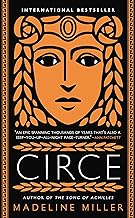
Modern retellings perform a radical act of recentering. Madeline Miller's Circe gives voice to the Titan's daughter, exploring her loneliness, her discovery of power through witchcraft, her fraught relationships with gods and mortals, and her ultimate choice of a mortal life. Similarly, new novels focused on Clytemnestra interrogate the events that led a queen to become a regicide. What drives a woman to such an extreme act? Retellings frame it not as mere treachery, but as a long-delayed justice for the sacrifice of her daughter Iphigenia and a response to a lifetime of betrayal and violence.
Circe: The Power of Solitude and Self-Defined Magic
Circe's story, as masterfully told by Miller, is one of exile and self-invention. Banished to the island of Aiaia, she transforms her solitude from a punishment into a source of strength. Her magic—pharmaka—becomes a language of autonomy, a way to understand and manipulate the world on her own terms. Unlike the godly powers of her relatives, which are innate and often used for petty cruelty, Circe's witchcraft is learned, earned, and deeply connected to the natural world.
Her journey is deeply human despite her divinity. She experiences desire, heartbreak, the fierce love of motherhood, and the weight of mortality through her son, Telegonus. The climax of her arc is not a great battle, but a profound choice: to relinquish her immortality for a life of meaning, change, and love with a mortal. This reframes the entire concept of power, suggesting that true strength lies in the freedom to choose one's own path, not in eternal, static existence.
Clytemnestra: The Fury of a Wronged Mother and Queen
If Circe's power is introspective and transformative, Clytemnestra's is political and explosive. Where Circe finds freedom in isolation, Clytemnestra must wield her power in the treacherous, male-dominated court of Mycenae. A compelling Clytemnestra retelling positions her not as a one-dimensional villain, but as a skilled ruler, a grieving mother, and a woman strategically navigating a world that offers her no justice.
The murder of Agamemnon is recast as the culmination of a lifetime of trauma: her first husband was murdered before her eyes, her daughter was brutally sacrificed for favorable winds, and her husband returned from war with a concubine, Cassandra. Her act is one of calculated retribution and political reclamation. Modern interpretations ask the reader: in a system that offers no legal recourse to women, what is justice? Clytemnestra's story becomes a tragic exploration of the cost of taking power when it is denied to you.
Shared Themes in Feminist Mythological Retellings
Both narratives, though distinct, are pillars of contemporary feminist fiction set in the ancient world. They share several powerful themes:
- Agency in a Confining World: Both women operate within severe constraints—Circe by her exile, Clytemnestra by the patriarchal structures of royalty. Their stories are about carving out agency, whether through magic or political machination.
- Motherhood as a Complex Force: Motherhood is central to both characters, but it is neither sanitized nor solely nurturing. For Circe, it is a terrifying vulnerability and a source of fierce protection. For Clytemnestra, it is the root of her all-consuming grief and rage.
- Redefining Heroism: These are not stories of quests or physical battles in the traditional sense. The heroism lies in endurance, in cunning, in survival, and in the moral complexity of their choices.
- Confronting Divine and Mortal Injustice: Both women are victims of capricious gods and selfish men. Their journeys involve confronting these injustices and, in their own ways, seeking a form of reckoning.
Experiencing the Stories: The Power of the Audiobook Format
The emotional depth and lyrical prose of these Greek mythology retelling novels make them exceptional candidates for the audio format. A bestseller audiobook performance can bring new layers to the narrative, emphasizing the interiority of the protagonist. The narration for Circe, performed by Perdita Weeks, is widely acclaimed for its captivating and nuanced delivery that perfectly captures Circe's evolving voice from vulnerability to hardened power.
Similarly, a well-narrated audiobook of a Clytemnestra novel can convey the queen's towering rage, her calculated political mind, and her profound sorrow with an immediacy that leaps off the page. For listeners, the audiobook format transforms these ancient stories into intimate, first-person confessions, making the experience of these mythological novel retellings even more immersive and powerful.
Beyond Circe and Clytemnestra: The Expanding World of Retold Myths
The success of stories like Circe has opened the gates for a flood of brilliant retellings from the perspectives of other marginalized mythological figures. We are now seeing novels centered on Penelope, Medusa, Ariadne, Jocasta, and countless others. Each new story adds another facet to our understanding of the ancient world, challenging the monolithic hero narratives of the past.
This trend in historical fiction and mythological revision is more than a literary fad; it's a cultural recalibration. It asks us to reconsider who gets to be the hero, who gets to tell the story, and what we accept as "truth" in the legends passed down to us. Engaging with a retelling like the one focused on Clytemnestra is to participate in this ongoing conversation, to hear a voice that has been silenced for centuries finally speak her piece.
Conclusion: The Enduring Resonance of Ancient Stories Retold
The journeys of Circe and Clytemnestra, as reimagined by modern authors, resonate because they speak to timeless human experiences—the search for self, the hunger for justice, the complexities of love and family, and the struggle for power in a world that seeks to deny it. They transform figures of fear and scorn into fully realized, empathetic characters whose choices, however extreme, become understandable.
Whether you begin with the solitary magic of Circe's island or the tense, politically charged halls of Clytemnestra's Mycenae, you are embarking on a reading experience that is both a deep dive into a rich mythological past and a sharp reflection on themes that are urgently relevant today. These are not mere escapist stories; they are profound explorations of what it means to be a woman with power in a world determined to define you. Discover the transformative power of these retellings for yourself, and listen as these ancient voices are finally heard in all their formidable, complicated glory.

![Circe [AdN] (Spanish Edition)](https://m.media-amazon.com/images/I/813lle2hSML._AC_UY218_.jpg)


