
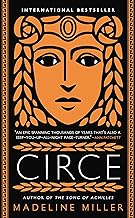
In the vast pantheon of Greek mythology, few figures have undergone as profound a transformation in modern literature as Circe. Once relegated to the margins of epic tales as the sorceress who turned Odysseus's men into swine, she has been resurrected and reimagined with stunning depth and empathy by author Madeline Miller. Her novel, Circe, is not merely a retelling; it is a reclamation, a powerful act of feminist storytelling that has captivated millions of readers worldwide and earned its place as a modern classic. This exploration delves into why Miller's interpretation of the mythological witch resonates so deeply in our contemporary moment.
The journey of Circe from a footnote in Homer's Odyssey to the complex protagonist of a bestseller is a testament to the enduring power of myth. Myths are not static; they are living narratives that each generation interprets anew. Miller's genius lies in her ability to excavate the silences of ancient texts. Where Homer gave us a powerful but ultimately antagonistic enchantress, Miller asks the questions left unanswered: Who was Circe before Odysseus arrived on her shores? What loneliness drove her to her island of Aiaia? What desires and disappointments shaped her? The result is a first-person narrative of breathtaking intimacy, granting voice to a character history had rendered largely mute.
From Minor Nymph to Mythic Heroine: The Core of Miller's Retelling
At its heart, Circe is a profound character study. Miller introduces us to Circe not as a fully-formed goddess, but as a child—awkward, unloved by her divine family, and possessing a voice that is deemed "thin" and mortal-like. Her alienation from the cruel, glittering world of the Titans and Olympians is the crucible in which her character is forged. Denied the power and respect of her kin, she discovers a different kind of potency: witchcraft, or pharmakeia. This is a central theme in this brand of feminist fiction—the redefinition of power. For Circe, true power is not the inherited might of Zeus, but knowledge, perseverance, and the transformative magic born of pain and exile.
Miller masterfully weaves Circe's story through the tapestry of Greek mythology. Readers encounter familiar figures—Helios, Prometheus, Hermes, the Minotaur, Daedalus, and of course, Odysseus—but always from Circe's unique perspective. Her interactions with Odysseus are particularly revelatory. Miller portrays their relationship as one of complex mutual recognition between two weary, cunning survivors, reframing the famous episode not as a hero triumphing over a monster, but as a poignant, temporary meeting of equals. This nuanced approach is what elevates the novel from simple mythological retelling to a serious literary examination of agency and voice.
Circe as a Landmark in Feminist Fiction
The novel's status as a seminal work of feminist fiction is undeniable. Circe's narrative arc is one of self-actualization against a world—both divine and mortal—that seeks to define, control, or punish her. She contends with the predatory desires of gods, the violence of heroes, and the expectations of a patriarchal mythic order. Her choice of exile on Aiaia is reframed not as a punishment, but as a hard-won autonomy. On her island, she builds a life defined by her own rules, her craft, and her connection to the natural world. This resonates powerfully with modern discussions of autonomy, carving out space for oneself, and finding strength in isolation.
Furthermore, Miller explores themes of motherhood, creation, and legacy in ways rarely afforded to mythological women. Circe's relationships, particularly with her son Telegonus, are portrayed with raw emotional honesty, complicating the picture of the "witch" with the very human struggles of care, fear, and letting go. This depth of characterization challenges the one-dimensional portrayals of powerful women in ancient lore, offering a template for how feminist fiction can breathe new life into old stories.
The Global Phenomenon: Circe in Translation
The power of Miller's story transcends language, as evidenced by its successful translation into numerous languages, including the acclaimed German novel edition titled Ich bin Circe: Roman. This edition, described as "Eine rebellische Neuerzählung des Mythos um die griechische Göttin Circe," captures the rebellious spirit of the original. The German translation allows a new audience to engage with Circe's journey, proving that the themes of isolation, resilience, and the search for self are universal. For German-speaking readers seeking this transformative reading experience, the story is accessible as an ebook and physical copy, bringing Miller's modern classic to a global bookstore.
The critical acclaim, including praise from publications like Brigitte who hailed it as "Göttlich-antiker Feminismus: ein fabelhafter Bestseller!", underscores its cross-cultural impact. It stands as a prime example of how a mythological retelling can become a global literary touchstone, connecting readers through a shared fascination with a reinvented mythological past.
Why Circe's Story Matters Today
So, why does a novel about an ancient Greek goddess witch continue to top charts and dominate book club discussions? The answer lies in its profound relevance. Circe's story is, at its core, about an individual forging an identity in opposition to powerful systems. It's about the loneliness of being different, the courage required to embrace one's unique power (even when it is feared), and the long, patient work of crafting a meaningful life. In an era where conversations about agency, gender, and rewriting historical narratives are paramount, Circe offers a mythic mirror.
Readers see in Circe not a remote goddess, but a reflection of their own struggles with family expectations, societal pressures, and the quest for self-definition. Her immortality becomes a metaphor for the long arc of personal growth—the mistakes made over centuries, the slow accumulation of wisdom, and the eventual, hard-earned peace. Madeline Miller's masterpiece does more than entertain; it validates the quiet, persistent strength it takes to say, as the title declares, "I am Circe."
For anyone intrigued by mythology, character-driven stories, or powerful narratives of transformation, engaging with Circe's tale is essential. Whether through the original English version or its celebrated German counterpart, Ich bin Circe, this novel is a landmark achievement. It proves that some stories are timeless not because they remain unchanged, but because they possess the infinite capacity to be changed, reinterpreted, and rediscovered by each new generation, speaking ancient truths in a definitively modern voice.

![Circe [AdN] (Spanish Edition)](https://m.media-amazon.com/images/I/813lle2hSML._AC_UY218_.jpg)


