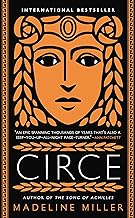
In the vast pantheon of Greek mythology, few figures have undergone as profound a transformation in modern literature as Circe. Once relegated to a brief, fearsome episode in Homer's Odyssey, she has been resurrected and reimagined by author Madeline Miller in her stunning, bestselling fantasy novel. Miller's Circe is not just a retelling; it is a complete reclamation, a deep dive into the psyche of a goddess who has been misunderstood for millennia. This article explores the power of Miller's narrative, the themes that resonate with contemporary readers, and the availability of this masterpiece in its Spanish edition for a wider audience.
The journey of Circe from a footnote in an epic to the protagonist of a global phenomenon is a testament to the enduring power of myth and the skill of its modern interpreter. Madeline Miller, a classicist by training, brings scholarly rigor and poetic sensibility to her work. Her debut, The Song of Achilles, won the Orange Prize for Fiction and set a high bar for mythological fiction. With Circe, she surpassed expectations, crafting a novel that spent over a year on The New York Times bestseller list and captivated millions. The story invites us to see the world from the perspective of the so-called witch of Aiaia, exploring her loneliness, her power, her defiance, and ultimately, her humanity.
From Minor Nymph to Mythic Heroine: Reclaiming Circe's Narrative
In Homer's original tale, Circe is a danger to be overcome. She turns Odysseus's men into swine, and the hero must outwit her with the help of Hermes. Miller's genius lies in flipping this script. She asks: What events shaped this goddess? What drove her to her island exile? The novel begins with Circe's birth as a daughter of the sun god Helios, dismissed for her strange voice and lack of divine radiance. Miller paints a vivid picture of the petty, cruel, and narcissistic world of the Titans and Olympians, a court where Circe is an outsider. Her discovery of witchcraft—pharmakis—is not an act of malice but one of self-preservation and curiosity, a path to a power uniquely her own in a world that offers her none.
This narrative shift is profoundly feminist. Miller gives voice to a character who was historically a plot device for a male hero's journey. We experience her complex relationships: her love for the mortal Glaucos, her betrayal by him, her transformative (and often punitive) use of her powers, and her poignant encounters with figures like Daedalus, the Minotaur's mother Pasiphaë (her sister), and of course, Odysseus. Each interaction deepens our understanding of her isolation and her yearning for connection, themes that transcend the ancient setting and speak directly to modern readers of the Spanish edition and beyond.
Themes of Power, Isolation, and Self-Discovery
At its heart, Circe is a novel about the different facets of power. There is the brute, unchallenged power of the gods, which is often arbitrary and cruel. Then there is Circe's power, which is earned through study, practice, and a deep connection to the natural world. Her witchcraft is a nuanced metaphor for knowledge, creativity, and agency—forces that are often feared and suppressed, especially when wielded by a woman. Her island, Aiaia, becomes both a prison and a sanctuary, a place of enforced isolation where she ultimately finds her true self.
Miller masterfully explores the tension between immortality and meaning. As an immortal, Circe watches mortals live, love, and die with breathtaking intensity. Her relationship with Odysseus is particularly revealing; she sees his famed cunning but also his weariness and duplicity. Later, her choice regarding her own mortality and that of her son, Telegonus, forms the emotional climax of the novel. It is a meditation on what makes a life worth living, a question as relevant today as it was in the age of myths. These universal themes are a key reason why the novel, including the Circe [AdN] (Spanish Edition), continues to find new audiences globally.
Circe in Translation: The Spanish Edition and Global Reach
The success of Circe is a global phenomenon, and its translation into Spanish as Circe [AdN] (Edición en Español) has made Madeline Miller's masterpiece accessible to millions of Spanish-speaking readers. A great translation does more than convert words; it captures the rhythm, poetry, and emotional depth of the original. The Spanish edition allows readers to experience the lyrical beauty of Miller's prose and the profound interiority of Circe's journey in their native language. This accessibility is crucial for a novel that deals with such intimate themes of identity and belonging.
For collectors and enthusiasts of fantasy novel retellings, the Spanish edition is a valuable addition to any library. It represents the cross-cultural appeal of Greek mythology and the skill of contemporary authors like Miller in revitalizing these ancient stories. Whether you are reading it in English or Spanish, the core of the story—a powerful woman carving out her destiny in a world designed to limit her—remains powerfully resonant.
Why Circe Stands Out in Modern Literature
In a crowded landscape of mythological retellings, Circe stands tall for several reasons. First is Miller's impeccable prose, which is both elegant and fiercely compelling. She writes with the authority of a scholar and the heart of a poet. Second is the psychological depth she grants her protagonist. This Circe is fully realized, with flaws, desires, regrets, and tremendous growth. She is not simply a victim or a villain; she is complex and human in her divinity.
Finally, the novel's timing was perfect. Arriving during a surge of interest in feminist re-examinations of history and myth, Circe gave readers a template for re-engaging with the past. It asks us to question the stories we've been told and to consider who gets to be the hero. This has cemented its place not just as a bestseller, but as a significant work of modern literature. Its influence can be seen in the wave of similar retellings that have followed, but few have matched its critical and popular acclaim.
Exploring the World of Madeline Miller
For those captivated by Circe, the natural next step is to explore Madeline Miller's other work. Her first novel, The Song of Achilles, offers an equally moving and beautifully written take on the relationship between Achilles and Patroclus. While distinct in tone, it shares Circe's focus on marginalized perspectives within epic tales. Reading both novels provides a fuller appreciation of Miller's talent for humanizing mythological figures.
Furthermore, the popularity of Circe has sparked renewed interest in the original mythological sources. Readers often find themselves diving back into Homer's Odyssey or Robert Graves's The Greek Myths with fresh eyes. This intertextual dialogue between the ancient and the modern is one of the great pleasures of engaging with Miller's work. It transforms passive reading into an active exploration of cultural heritage.
Conclusion: The Enduring Spell of Circe
Madeline Miller's Circe is more than a book; it is an experience. It is a powerful reminder that even the oldest stories can be told anew, offering fresh wisdom for each generation. The novel grants agency, voice, and profound humanity to a character who was once a mere obstacle in a man's journey. Its themes of isolation, resilience, self-invention, and the search for meaning transcend the page, lingering long after the final chapter.
Whether you are discovering her story for the first time in English or through the acclaimed Spanish edition, the journey to Aiaia is one worth taking. Circe's story is ultimately one of transformation—not just of men into swine, but of a forgotten nymph into an immortal legend of her own making. In giving us this Circe, Madeline Miller has not only written a definitive version of the myth but has also created a timeless tale for anyone who has ever felt like an outsider searching for their own power and place in the world.