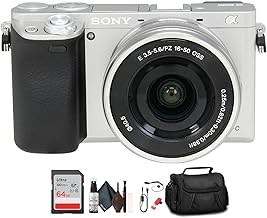
Choosing your first serious camera is an exciting but often confusing step. For years, the Sony A6000 has been the undisputed champion for beginners, offering incredible value in a compact mirrorless body. But with newer models like the Sony Alpha a6100 16-50mm kit now available, many photographers are wondering: should you stick with the classic or upgrade to the newer sibling? This comprehensive guide breaks down the key differences between the A6000 and the A6100, helping you decide which camera best fits your photography journey, whether you're into travel, vlogging, or just capturing life's moments.
Core Specs and Design: A Familiar Yet Refined Package
At first glance, the Sony A6000 and the A6100 share a remarkably similar DNA. Both cameras feature the same compact, lightweight body that made the A6000 a favorite for travel photographers. They share a 24.2MP APS-C sensor, which delivers excellent image quality with plenty of detail for prints and online sharing. The core ergonomics, including the mode dial, control wheel, and built-in flash, are virtually identical, meaning if you're familiar with one, you'll feel right at home with the other. This continuity is a hallmark of the Sony Alpha series, making it easy to grow within the ecosystem. The included 16-50mm power zoom lens in the Alpha a6100 kit is the same versatile, collapsible optic, perfect for keeping your gear bag light.
The Game Changer: Autofocus and Real-Time Tracking
This is where the generational leap becomes most apparent. The original Sony A6000 boasted a fast 179-point hybrid AF system, which was revolutionary for its time. The Sony A6100, however, inherits the vastly superior autofocus technology from Sony's higher-end models. It features 425 phase-detection points covering 84% of the frame and Real-time Eye AF (for both humans and animals) as well as Real-time Tracking. For a beginner, this translates to a fundamentally different experience. The camera locks onto and follows a subject's eye with uncanny accuracy, whether you're photographing a portrait, a pet, or a child running around. This means you can focus on composition and moment, not on wrestling with the autofocus points. It's a massive confidence booster for anyone new to interchangeable lens cameras.
Video Capabilities: From HD to 4K for Vloggers
If video is a priority, the choice becomes clearer. The A6000 records Full HD (1080p) video, which is still perfectly serviceable for many users. The A6100, however, steps up to 4K UHD recording without pixel binning, capturing more detail and providing cleaner footage. More importantly for aspiring content creators, the A6100 includes a microphone input—a critical feature absent in the A6000. This allows you to connect an external microphone for vastly improved audio quality, a non-negotiable for serious vlogging. The A6100 also features a 180-degree flip-up LCD screen, making it easy to frame yourself while recording. For anyone looking at a camera for hybrid photo and video use, the A6100's upgrades are significant and worth the investment.
User Experience and Connectivity
Both cameras offer a user-friendly interface, but the A6100 benefits from a more modern menu system and slightly improved button responsiveness. A key quality-of-life improvement in the A6100 is its longer battery life (approx. 380 shots vs. 360 in the A6000), which can make a difference on a long day of shooting. Connectivity is similar, with both offering Wi-Fi and NFC for transferring images to your smartphone. The A6100 also supports Bluetooth for constant low-power connection to your phone, making remote control and location data tagging more seamless. For the travel photographer who values convenience and quick sharing, these small tweaks add up.
Who Should Choose the Sony A6000?
The Sony A6000 remains a phenomenal value proposition. If you are on a very tight budget and your primary focus is still photography—especially landscapes, street photography, or casual portraits—the A6000 delivers stunning image quality that rivals much newer cameras. Its autofocus, while not as advanced as the A6100's, is still very capable for static or predictably moving subjects. It's the perfect gateway into the world of mirrorless cameras and the expansive Sony E-mount lens system. If you find a great deal on a renewed or used model in excellent condition, it's a purchase you're unlikely to regret.
Who Should Upgrade to the Sony Alpha a6100?
The Sony Alpha a6100 16-50mm kit is the definitive choice for the modern beginner. If you see yourself capturing fast-moving kids or pets, the Real-time Eye AF and Tracking are worth the price of admission alone. For anyone even remotely interested in video content creation, the 4K capability, flip screen, and microphone input make the A6100 a legitimate vlogging camera. It's also the smarter long-term investment; its more advanced features will not hold you back as your skills grow. If your budget allows for the newer model, the A6100 provides a more complete, future-proofed experience that truly simplifies the technical challenges of photography, letting you focus on creativity.
Final Verdict: A Clear Path Forward
Both the Sony A6000 and the A6100 are outstanding cameras that can produce professional-looking results. The A6000 is a legendary best beginner camera that has stood the test of time. However, the technological advancements in the A6100—particularly its world-class autofocus and modern video features—represent a substantial leap. For most new photographers starting today, especially those interested in travel photography or vlogging, the Sony Alpha a6100 is the recommended choice. It removes more barriers between you and a great shot, providing a smoother, more empowering learning curve. Whichever you choose, you're stepping into the versatile Sony E-mount ecosystem, ready to capture your world with stunning clarity.