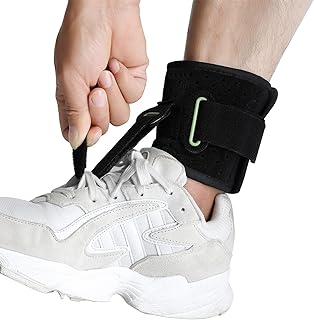
Regaining the ability to walk confidently after a neurological event like a stroke or managing conditions like hemiplegia is a primary goal for many. A key component in this journey is often an Ankle-Foot Orthosis, commonly known as an AFO brace. These devices provide critical support to the ankle and foot, addressing foot drop (the inability to lift the front of the foot) and varus deformity (an inward turning of the foot). For individuals seeking a professional-grade solution, the Healsmile Professional AFO Drop Foot Brace Orthosis stands out as a meticulously designed tool to improve walking gait, relieve pain, and support the recovery process. This guide delves into how a high-quality AFO brace works and what makes the Healsmile model a potential game-changer.
Understanding Foot Drop and the Role of an AFO Brace
Foot drop, or drop foot, is a muscular weakness or paralysis that makes it difficult to lift the front part of the foot. This often results from nerve damage related to stroke, multiple sclerosis, cerebral palsy, or spinal cord injuries. The consequence is a distinctive and inefficient gait pattern: to avoid dragging the toes, individuals often lift their knee higher than normal (steppage gait) or swing their leg outward. This not only looks awkward but is exhausting, increases the risk of trips and falls, and can lead to secondary pain in the knee, hip, and lower back. An AFO brace is engineered to solve this problem. By providing dorsiflexion assistance (helping to lift the foot), it ensures the toes clear the ground during the swing phase of walking, promoting a safer, more natural, and energy-efficient stride.
Key Features of a Professional-Grade AFO for Hemiplegia and Stroke Recovery
Not all AFOs are created equal. Effective management of post-stroke hemiplegia or varus foot drop requires a device that addresses multiple facets of the condition. The Healsmile Professional AFO is built with these specific challenges in mind. Its design focuses on three core pillars: gait correction, pain relief, and user comfort. The orthosis offers dynamic support that not only holds the foot in a neutral position but also allows for a controlled motion during walking, which is crucial for retraining muscles and promoting neuroplasticity—the brain's ability to rewire itself after injury. This makes it more than just a support device; it's an active tool in stroke recovery.
1. Targeted Support for Varus Deformity and Gait Improvement
Varus foot drop, where the foot turns inward, adds complexity to standard drop foot. A generic brace may not provide the necessary medial (inner) support to correct this. The Healsmile brace incorporates design elements to counteract varus positioning, helping to align the foot and ankle properly. This precise alignment is fundamental to walking gait improvement. By stabilizing the ankle in a functional position, it enables a more symmetrical heel-to-toe walking pattern, reduces abnormal compensatory movements, and decreases the metabolic cost of walking, allowing users to walk farther with less fatigue.
2. Lightweight Design for Enhanced Usability
A common complaint with traditional orthotics is their weight and bulk, which can themselves be fatiguing. The Healsmile brace emphasizes being a lightweight AFO, constructed from advanced, durable polymers. This reduces the energy required to lift the leg during walking and makes the device less intrusive, encouraging all-day wear. Compliance is critical for therapeutic benefit, and a comfortable, light brace is far more likely to be worn consistently, leading to better functional outcomes.
3. Anatomical Fit and Pain Relief Mechanism
Pain often accompanies musculoskeletal imbalances caused by foot drop. Improper alignment strains joints and muscles upstream. The Healsmile Professional AFO is contoured to fit the anatomy of the lower leg, calf, and foot, distributing pressure evenly to prevent hotspots and skin irritation. By correcting the foot's position, it alleviates the strain on the knee and hip joints, directly contributing to pain relief. This allows individuals to focus on rehabilitation exercises and daily activities without being hindered by discomfort.
Who Can Benefit from the Healsmile Professional AFO Brace?
This orthosis is specifically designed for adults (men and women) dealing with moderate to severe foot drop stemming from central nervous system conditions. The primary beneficiaries include:
- Post-Stroke/Hemiplegia Patients: Individuals recovering from a stroke who have weakness or paralysis on one side of the body (hemiplegia). The brace provides the external support needed to re-learn walking safely. It is a crucial hemiplegia brace for this phase of recovery.
- Those with Varus Foot Drop: Patients whose foot drop includes an inward turning component will find the targeted design particularly beneficial for achieving proper foot alignment.
- Individuals Seeking Gait Training: Physical therapists often use AFOs as a training tool. The stability provided by a professional foot drop orthosis like this one allows patients to practice weight shifting, balance, and proper step mechanics in a controlled manner.
- Active Users Needing Daily Support: Its lightweight and discreet design under clothing makes it suitable for individuals who want to remain mobile and active in their community despite their condition.
How to Integrate an AFO Brace into Your Recovery Journey
Simply wearing a brace is not a standalone solution. For optimal results, the Healsmile Professional AFO should be part of a comprehensive rehabilitation plan.
- Professional Fitting and Guidance: Always consult with a physician, orthotist, or physical therapist before using an AFO. They can assess your specific needs, ensure proper fit (like selecting the correct size, e.g., Left/XL), and teach you how to don and doff the brace correctly.
- Gradual Break-in Period: Start by wearing the brace for short periods (1-2 hours) indoors to allow your skin and muscles to adapt. Gradually increase wear time as tolerated.
- Combine with Physical Therapy: Use the stability provided by the brace to actively engage in prescribed physical therapy exercises. Focus on strengthening the hip, knee, and core muscles, as well as practicing balance and gait drills. The brace creates the opportunity for correct movement patterns.
- Monitor Skin and Comfort: Check your skin for any signs of redness or pressure points after each use, especially during the initial weeks. The brace should be snug and supportive but not painful.
Why Choose a Specialized Device Like the Healsmile AFO?
In the realm of drop foot brace options, from simple elastic sleeves to rigid custom-molded orthotics, the Healsmile Professional AFO occupies a valuable middle ground. It offers the structured, corrective support of a professional device without always requiring a fully custom, expensive fabrication process. Its off-the-shelf availability in specific sizes (like Left/XL) makes it an accessible and timely solution for many. By addressing the trifecta of support (dorsiflexion, varus correction, and medial-lateral stability), this specific orthosis model provides a targeted approach that generic supports cannot match. Investing in a properly designed brace is an investment in mobility, safety, and quality of life.
Conclusion: Taking a Step Toward Improved Mobility
Dealing with foot drop after a stroke or from hemiplegia is challenging, but it doesn't mean giving up on walking independently. A professional AFO brace, such as the Healsmile Professional model, serves as a powerful ally. It mechanically corrects the foot drop and varus deformity, paving the way for a safer, more efficient, and less painful gait. By improving walking mechanics, it reduces fall risk, conserves energy, and actively supports the neuro-rehabilitation process. If you or a loved one is navigating the path of recovery from neurological conditions affecting gait, exploring a dedicated foot drop orthosis could be the pivotal step toward reclaiming confidence and freedom of movement. Remember, the journey begins with a single, well-supported step.