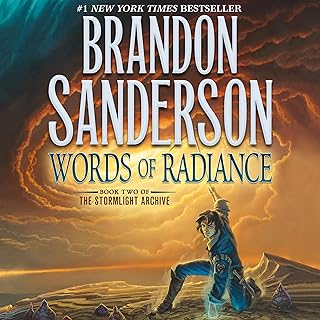
Brandon Sanderson's The Stormlight Archive stands as a titan in modern epic fantasy, and its fourth volume, Rhythm of War, pushes the boundaries of the series in profound and unexpected ways. For fans invested in the fate of Roshar, this installment is less a simple continuation and more a deep, sometimes challenging, excavation of its core themes: trauma, leadership, and the very nature of power. While earlier books delivered sweeping battles and world-shaking revelations, Rhythm of War turns the lens inward, focusing on the psychological and scientific underpinnings of its magic system and characters. This review will explore the novel's intricate plot, its monumental character development, and its crucial place within the larger Stormlight Archive saga and the expansive Cosmere.
At its heart, Rhythm of War is a novel of consequences. The fleeting peace following the events of Oathbringer has shattered. The war against the fused and Odium's forces has evolved into a brutal, technological arms race. The discovery of anti-Stormlight and the enemy's ability to mimic Shardblades and Plate has nullified many of the Radiants' advantages. This shift forces the characters, and the reader, to move beyond awe at the magic and into a rigorous understanding of its mechanics. Sanderson, true to his meticulous world-building style, delves into the science of Surgebinding, Fabrials, and Light. This scientific focus might feel dense at times, but it is essential, transforming the magic from mere spectacle into a tangible, manipulable resource central to the war's outcome.
Character Arcs: The Weight of Radiance
The true strength of the Stormlight Archive has always been its characters, and Rhythm of War provides some of the most raw and powerful character studies in the series. Kaladin's struggle with depression and PTSD reaches a new crescendo as he is forced into a role of leadership without combat, grappling with the idea that he cannot save everyone. His journey in this book is a poignant and realistic portrayal of mental health, showing that progress is non-linear and that strength is often found in acceptance and support, not just in battle prowess.
Navani Kholin, often in the background as a scholar and queen mother, steps into the spotlight with a breathtaking arc. Her chapters are among the book's most compelling, as she engages in a dangerous game of scientific espionage with the enemy scholar Raboniel. Their twisted, respectful partnership explores themes of creation, legacy, and the blurred line between enemy and colleague. Navani's personal journey of overcoming self-doubt and recognizing her own genius is a masterclass in character development, solidifying her as one of the most important figures in the entire epic fantasy series.
Shallan's narrative continues to explore her fractured psyche, as she attempts to balance her various identities to infiltrate the enemy ranks. While her plotline can feel fragmented, it delves deeper into the cost of her Lightweaving abilities and sets the stage for a crucial personal reckoning. Meanwhile, Adolin's storyline in Shadesmar with the deadeye spren Maya is a highlight, offering heart, humor, and one of the most shocking and lore-significant moments in the entire Cosmere.
Cosmere Connections and World-Building Expansion
For long-time Sanderson fans, Rhythm of War is a treasure trove of Cosmere connections. The novel pulls back the curtain further on the overarching conflict between Shards like Odium, Cultivation, and Honor. We gain significant insights into the nature of Spren, the history of the Knights Radiant's fall, and the mechanics of Realmatic Theory. Characters from other worlds, like the enigmatic Wit (Hoid), play more direct and crucial roles. This deep integration rewards dedicated readers but can feel overwhelming to those solely invested in the story of Roshar. However, Sanderson generally manages to keep these elements serving the primary narrative, offering tantalizing hints for the future of his interconnected universe.
The world-building extends beyond lore into the societal impact of the war. We see the continued evolution of Urithiru, the political machinations of the coalition, and the ethical dilemmas of using captured Fused for research. The exploration of Singer/Parshendi culture, now under Odium's thrall, adds tragic depth to the conflict, reminding readers that there are sympathetic perspectives on both sides of the war.
Pacing, Themes, and the Sanderson Avalanche
The pacing of Rhythm of War is its most debated aspect. The first two-thirds of the book are methodical, focusing heavily on scientific research, political maneuvering, and internal character struggles. The action is more contained, often within the tower of Urithiru. This deliberate pace allows for incredible depth but requires patience. However, this build-up fuels the infamous "Sanderson Avalanche"—the final quarter of the book where all plot threads converge in a relentless, emotionally charged climax. The last 200 pages are a tour de force of payoff, featuring devastating betrayals, breathtaking magical breakthroughs, heroic last stands, and revelations that redefine the entire series. The finale of Rhythm of War is arguably the most consequential and game-changing in the Stormlight Archive so far.
Thematically, the book excels. It interrogates the cost of discovery, asking if the pursuit of knowledge can justify terrible means. It explores different models of leadership—Kaladin's protective instinct, Navani's collaborative genius, and Dalinar's unifying will. Most powerfully, it continues the series' compassionate focus on mental health, showing characters learning to live with their scars rather than magically curing them.
Is Rhythm of War Worth Reading?
Absolutely, but with context. Rhythm of War is not an entry point; it is a book for those already deeply committed to Roshar. It is a complex, demanding, and emotionally draining read that prioritizes depth over breadth. Its scientific focus and slower middle section may not resonate with all readers who loved the grand battles of earlier books.
Yet, for those invested in the characters and the cosmic lore of the Cosmere, it is an indispensable and brilliant installment. The character work for Kaladin and Navani alone is worth the journey. The final act is some of Sanderson's best writing, delivering moments of sheer awe and heartbreak that will be discussed for years. It successfully raises the stakes, deepens the mystery, and sets a dark, fascinating course for the second half of the Stormlight Archive.
As a fantasy bestseller and a cornerstone of modern epic fantasy, Rhythm of War proves that Brandon Sanderson is unafraid to challenge his readers and his own creations. It is a novel that trusts its audience to engage with complex ideas, sit with difficult emotions, and appreciate the intricate machinery behind the magic. For the dedicated fan, owning this hardcover fantasy tome is essential—not just for the story within, but for the profound ways it enriches every book that came before and will come after in this monumental series.