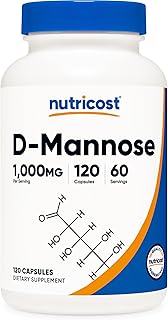
If you've ever searched for a natural way to support urinary tract health, you've likely come across D-Mannose. This simple sugar, closely related to glucose, has garnered significant attention for its unique ability to promote a healthy urinary environment. Unlike many supplements that make broad claims, the science behind D-Mannose is both fascinating and specific. This guide will cut through the hype, providing you with a comprehensive, evidence-based look at what D-Mannose is, how it works, and how to use it effectively as part of your wellness routine.
What is D-Mannose? The Science Simplified
D-Mannose is a type of simple sugar, or monosaccharide, that occurs naturally in small amounts in fruits like cranberries, apples, and peaches. While it's structurally similar to glucose, your body metabolizes it very differently. Only a small percentage is metabolized, with the majority being rapidly excreted through the kidneys into the urinary tract. It's this unique pharmacokinetic profile that forms the basis of its primary health application.
How Does D-Mannose Work for Urinary Tract Health?
The most well-researched benefit of D-Mannose revolves around urinary tract support. Many common urinary discomforts are linked to certain bacteria, most notably E. coli, adhering to the walls of the urinary tract. D-Mannose acts through a clever mechanism of molecular mimicry. The E. coli bacteria have tiny, hair-like projections called fimbriae that are covered with lectin proteins. These lectins bind to mannose residues naturally present on the lining of the urinary tract.
When you supplement with D-Mannose, a high concentration of this sugar floods into the urinary system. The bacterial lectins have a stronger affinity for the free-floating D-Mannose molecules than for the mannose on your own cells. Essentially, the bacteria bind to the D-Mannose in the urine instead of your urinary tract lining. These bound bacteria are then flushed out during urination, helping to clear them from the system and support a healthy microbial balance. It's a proactive approach to maintaining urinary comfort.
Key Benefits and Potential Uses of D-Mannose
Understanding the mechanism helps clarify its potential uses. It's important to note that while research is promising, D-Mannose is a supplement for supporting wellness, not a treatment for medical conditions.
1. Supporting Urinary Tract Comfort
This is the flagship application. Several clinical studies have investigated D-Mannose for promoting urinary tract health. For instance, a 2014 study published in the World Journal of Urology found D-Mannose to be effective for supporting women's urinary health. Many users incorporate it into their daily routine, especially if they are prone to occasional urinary discomfort, often finding it a gentler alternative to other long-term strategies.
2. Promoting a Healthy Bladder Environment
By helping to prevent unwanted bacterial adhesion, D-Mannose supports the bladder's natural defense mechanisms. A bladder with a healthy lining is better equipped to maintain its normal function. This makes D Mannose a topic of interest in holistic health circles focused on foundational wellness.
3. Synergy with Other Nutraceuticals
D-Mannose is often combined with other ingredients for a comprehensive approach. Common partners include:
- Cranberry Extract: Provides proanthocyanidins (PACs) that may also inhibit bacterial adhesion.
- Hibiscus: Known for its antioxidant properties.
- Vitamin C: Can help support immune function and slightly acidify urine.
These combinations aim to support urinary health through multiple pathways.
Who Can Benefit from D-Mannose?
While often associated with women's health, D-Mannose can be a useful supplement for a broader audience:
- Women seeking proactive urinary health support, particularly those with a history of occasional discomfort.
- Postmenopausal women, as changes in pH and mucosa can alter the urinary environment.
- Individuals with catheters or mobility issues who may be more susceptible to urinary challenges.
- Anyone looking for a natural, well-tolerated supplement to include in a general wellness protocol focused on the urinary system.
As always, it's crucial to consult with a healthcare provider before starting any new supplement, especially if you have underlying health conditions like diabetes, are pregnant, or are breastfeeding.
Common Mistakes and How to Avoid Them (The "Buyer's Guide" Section)
Navigating the supplement aisle can be confusing. Here are the top pitfalls to avoid when choosing and using a D-Mannose product.
Mistake #1: Ignoring Purity and Dosage
Not all D-Mannose is created equal. Some products are cut with fillers like maltodextrin or excessive amounts of Vitamin C. Look for products that specify pure D-Mannose powder or capsules. The effective dosage in studies typically ranges from 1.5 to 2 grams per day for maintenance, and sometimes higher for acute support. Ensure your chosen product provides a sensible dose per serving.
Mistake #2: Choosing the Wrong Form
D-Mannose comes in powders, capsules, and tablets. Powders are often the most cost-effective and allow for flexible dosing, making them ideal for those following specific protocols. Capsules offer convenience and portability. Consider your lifestyle—if you travel often, capsules might be better. If you prefer mixing a drink, a pure powder like the one found here could be ideal.
Mistake #3: Forgetting About Synergy
While pure D-Mannose is powerful, your needs might be better met by a blended formula. If you're looking for broad-spectrum urinary tract support, a product that combines D-Mannose with cranberry, hibiscus, or probiotics might be more effective. Conversely, if you want the singular action of D-Mannose, a pure product is the way to go. Know your goal.
Mistake #4: Inconsistent Use and Poor Hydration
D-Mannose works by being present in the urinary tract. Taking it sporadically is less effective than consistent, daily use for maintenance. More importantly, it must be taken with plenty of water. Adequate hydration is non-negotiable; it ensures the D-Mannose is properly diluted and facilitates the flushing action. Don't expect the supplement to work in a dehydrated system.
How to Choose a High-Quality D-Mannose Supplement
Armed with the knowledge of what to avoid, here’s your positive checklist for selecting a superior product.
- Check the Source and Purity: Opt for products that are non-GMO and free from unnecessary additives, artificial colors, or preservatives. Pharmaceutical-grade purity is a good sign.
- Verify the Form and Dosage: Ensure the serving size delivers a clinically relevant amount (e.g., 500mg to 2000mg). Decide between powder or capsule based on your preference.
- Read the Full Label: Look for third-party testing seals for quality assurance. Check for allergens if you have sensitivities.
- Consider the Brand Reputation: Choose companies with transparency about their sourcing and manufacturing processes (cGMP certified facilities are a plus).
- Evaluate Value: Calculate the cost per gram of pure D-Mannose. A larger container of powder often provides the best long-term value for daily users.
Integrating D-Mannose into Your Wellness Routine
For general urinary tract support, a common protocol is 1-2 grams of D Mannose per day, taken with a large glass of water. It can be taken all at once or split into two doses. Consistency is key for maintenance. Some choose to take it indefinitely, while others use it periodically. It is generally well-tolerated, though high doses may cause mild bloating or loose stools in some individuals, which usually subside as the body adjusts.
The Bottom Line: A Natural Tool for Proactive Health
D-Mannose represents a fascinating intersection of simple biochemistry and practical health application. Its targeted mechanism of action for supporting urinary tract health is supported by growing scientific evidence and widespread user experience. By helping to maintain a clear and healthy urinary environment, it serves as a valuable tool in a proactive wellness toolkit.
Success with D-Mannose hinges on choosing a high-quality product, using it consistently, and pairing it with foundational healthy habits—primarily staying well-hydrated. Whether you opt for a pure powder, a convenient capsule, or a synergistic blend, understanding how it works empowers you to make the best choice for your individual health journey. Remember, supplements are just one piece of the puzzle; a balanced diet, regular exercise, and consultation with your healthcare provider are essential for overall well-being.